BMS Systems

BMS Systems (Building Management System)

  • Centralized monitoring and control for HVAC, electrical, lighting and utility equipment
  • Real-time monitoring of temperature, humidity, pressure, alarms, and energy consumption
  • Improves operational efficiency, safety, automation, and preventive maintenance management
Designed and integrated as per client and site requirement.

Our Work

Real projects delivered by our team.

Project images coming soon.

Upload images to assets/images/products/bms-systems/work/

Turnkey BMS Systems for Building Automation, HVAC Control & Facility Management in Bangalore

A Building Management System (BMS) is a centralised software and hardware platform that monitors, controls, and automates the mechanical, electrical, and environmental systems within a building or industrial facility. In environments where HVAC performance, energy consumption, air quality, equipment reliability, and regulatory compliance must be maintained continuously — pharmaceutical plants, hospitals, cleanrooms, laboratories, IT parks, data centres, commercial buildings, and manufacturing facilities — BMS systems are not optional infrastructure. They are the operational layer that makes facility management measurable, responsive, and auditable.

S.M. Enterprises operates as a building management system company in Bangalore and across Karnataka, providing engineering, integration, installation, commissioning, and support for BMS systems across a wide range of facility types and complexity levels.

01

What a BMS System Controls and Monitors

A deployed BMS system integrates with the facility's HVAC systems, electrical distribution networks, lighting circuits, utility meters, and ancillary building systems through a network of smart sensors, controllers, PLCs, and communication protocols — typically BACnet, Modbus, or LonWorks. From a single operator interface, facility managers gain real-time visibility into temperature, humidity, differential pressure, air change rates, energy consumption, equipment run hours, alarm conditions, and system status across every connected zone and plant item.

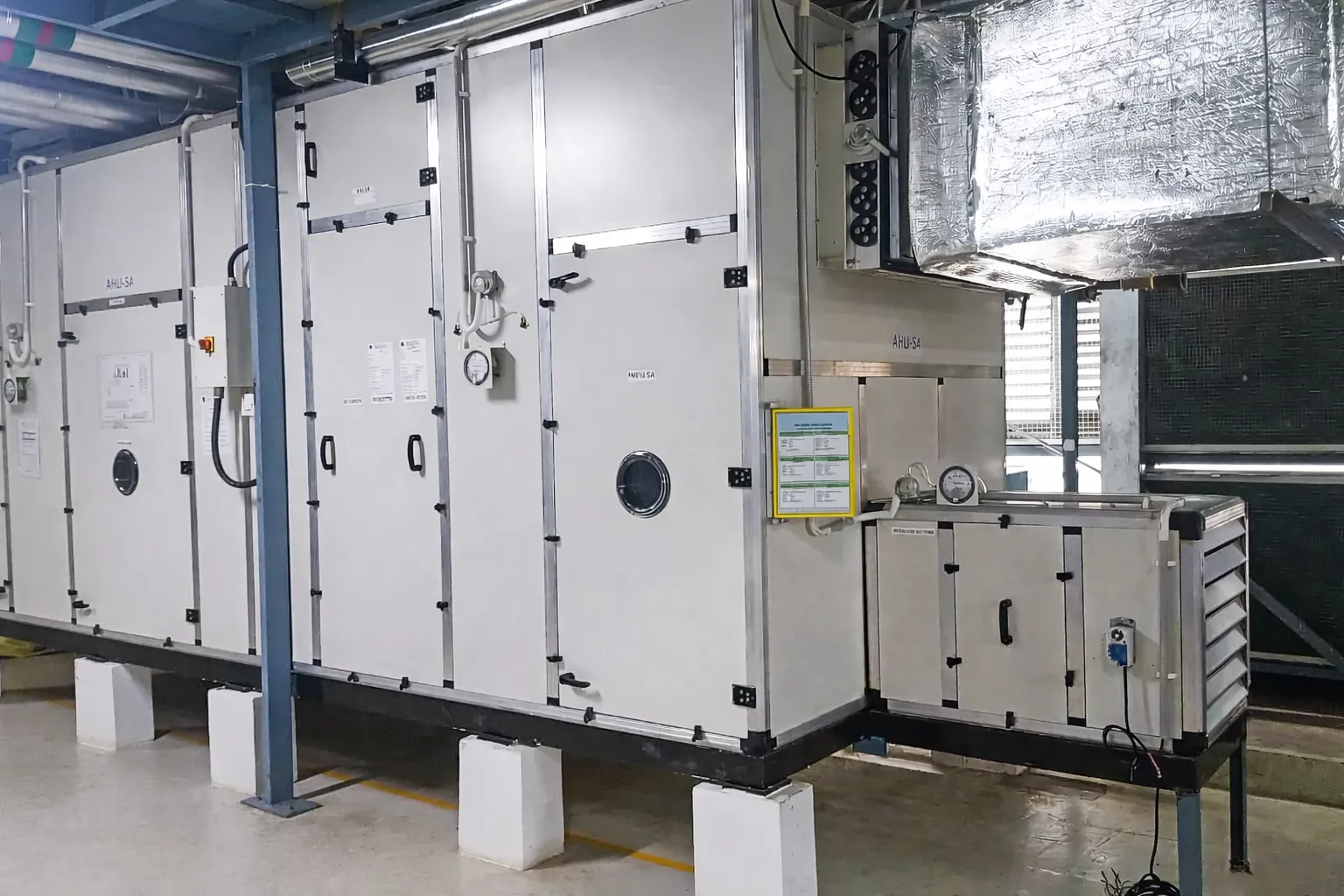
HVAC automation is typically the primary integration scope. As an HVAC automation system integrator, S.M. Enterprises configures BMS logic to manage AHU start-stop sequences, VAV damper positioning, chiller plant staging, cooling tower control, and pressurisation setpoints — replacing manual operator intervention with programmed, condition-responsive control that maintains environmental parameters within specified bands continuously and without human input.

Lighting control integration allows the BMS to manage zone-level illumination based on occupancy schedules, daylight sensor inputs, and time-of-day programming — reducing energy consumption in unoccupied or partially occupied areas without impacting occupant comfort in active zones. Electrical monitoring sub-systems feed real-time KWh, KVA, power factor, and demand data into the BMS dashboard, enabling energy managers to identify consumption anomalies, benchmark performance against baselines, and generate energy reports for sustainability or compliance purposes.

02

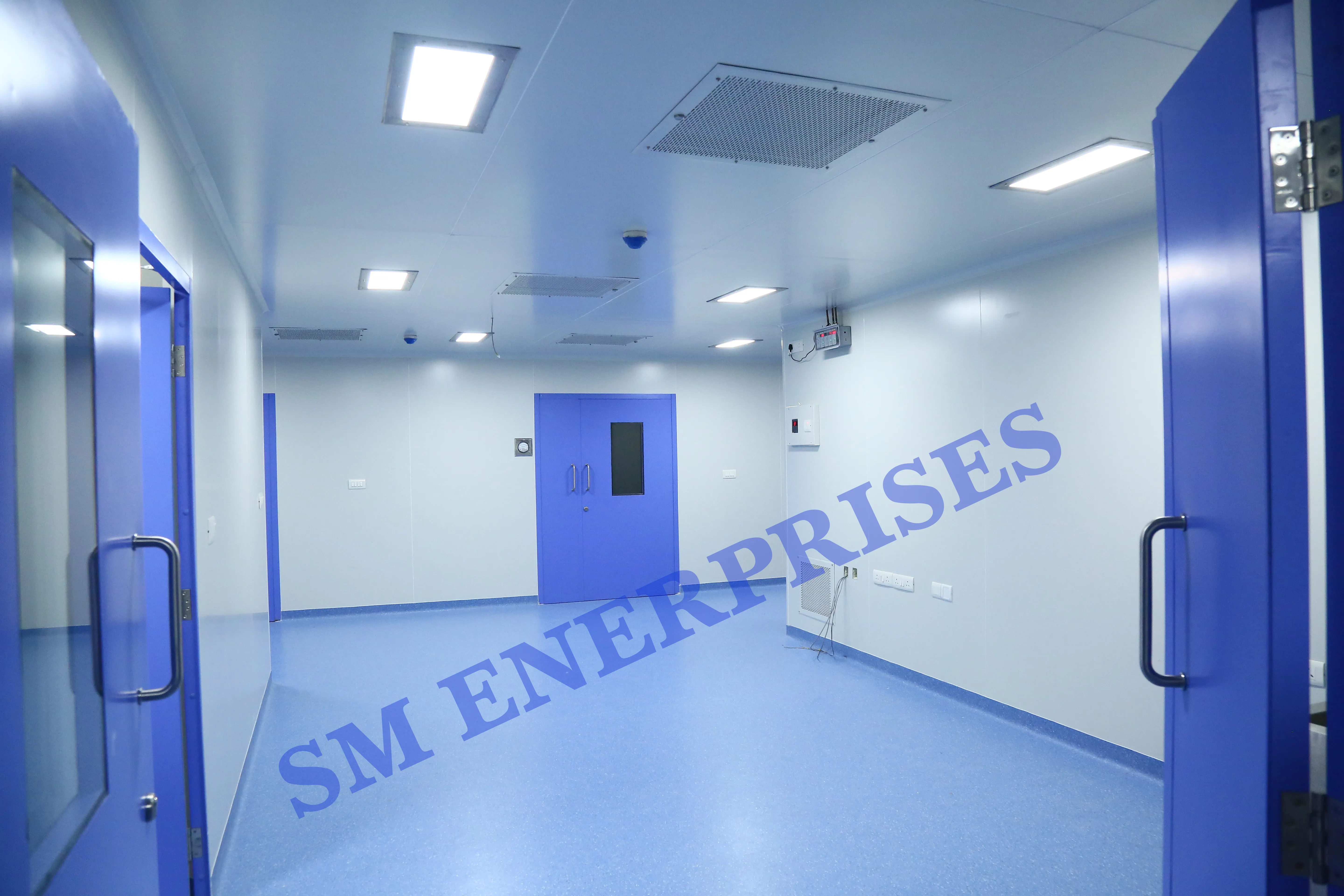
BMS Integration for Pharma, Cleanroom & Hospital Facilities

In regulated environments — pharmaceutical manufacturing facilities, hospital operation theatres, research laboratories, and ISO-classified cleanrooms — BMS systems carry an additional functional obligation: they must provide validated, timestamped records of environmental parameters including temperature, relative humidity, and differential pressure across all critical zones. This data supports regulatory submissions, internal QA audits, and CAPA processes under GMP and NABH frameworks.

S.M. Enterprises configures BMS platforms to generate compliant environmental monitoring logs, with alarm thresholds, escalation protocols, and secure data storage aligned to the documentation requirements of pharmaceutical and hospital clients. The integration extends to fire alarm systems and access control panels where project scope demands, providing a unified view of building safety and access status alongside environmental and utility data.

03

Turnkey BMS Solutions: From Design to Long-Term Support

As building automation system contractors, S.M. Enterprises delivers turnkey building management system solutions across the full project lifecycle — from initial system design and sensor/controller selection through to software configuration, field installation, loop testing, commissioning, operator training, and ongoing maintenance support. This single-vendor accountability eliminates the coordination gaps that arise when BMS software, hardware, and installation are sourced from separate parties, and ensures that system performance is verified end-to-end before handover.

For facilities already operating legacy building controls — including older pneumatic or standalone DDC systems — S.M. Enterprises provides BMS retrofitting and integration services, bringing disparate control systems under a unified smart building automation platform without requiring full infrastructure replacement.

Facility managers, MEP consultants, building owners, EPC contractors, pharmaceutical companies, hospital administrators, IT park operators, and commercial real estate developers in Bangalore planning new BMS installations or upgrades are invited to contact S.M. Enterprises for a detailed scope assessment and project-specific quotation. Call +91 82964 97411 or submit your requirements through the enquiry form on this page.
Need a Custom Quote for BMS Systems?

Our experts will respond within 24 hours with detailed specifications and pricing.

Talk to an Expert

Frequently Asked Questions

01

What is a BMS (Building Management System) and what does it control?

A Building Management System (BMS) is a centralized platform that monitors and controls a facility's HVAC, electrical, lighting, and utility equipment from a single interface. It collects real-time data on temperature, humidity, differential pressure, alarms, and energy consumption from sensors and controllers distributed across the building, then uses that data to automate equipment operation and flag deviations. A BMS typically integrates AHUs, chillers, VAV systems, lighting circuits, and power monitoring points, allowing facility teams to manage operations remotely instead of manually adjusting each system. This centralized control improves operational efficiency, safety, and preventive maintenance planning across industrial, pharmaceutical, and commercial buildings.

02

What is the difference between a BMS and a BAS?

The terms are closely related but scoped differently. A BAS (Building Automation System) refers to the underlying network of controllers, sensors, and actuators — such as DDC controllers on AHUs or VAV boxes — that automate individual building functions like HVAC, lighting, or access control. A BMS sits above the BAS as the centralized software and dashboard layer, aggregating data from multiple automated subsystems into one interface for monitoring, alarm management, trend analysis, and reporting. In practice, a BAS handles the automation of individual equipment, while a BMS provides facility-wide visibility, control, and analytics across all integrated systems.

03

How does a BMS differ from a SCADA system?

A BMS is purpose-built for building infrastructure — HVAC, lighting, electrical distribution, and environmental monitoring — with dashboards designed around occupant comfort, energy management, and facility operations. SCADA (Supervisory Control and Data Acquisition) is a broader industrial control architecture originally developed for process industries, utilities, and manufacturing plants, focused on real-time control of distributed equipment such as pumps, valves, and production lines over wide geographic areas. While both systems use similar communication protocols and collect sensor data for centralized control, a BMS is optimized for building-level automation and compliance reporting, whereas SCADA is generally applied to process-critical industrial operations.

04

What is the difference between PLC and DDC in building automation?

A PLC (Programmable Logic Controller) is a ruggedized industrial controller originally designed for manufacturing and process automation, capable of executing complex logic for machinery and production lines. A DDC (Direct Digital Control) controller is purpose-built for building automation, handling functions like AHU control, VAV box modulation, and chiller plant sequencing using pre-configured control algorithms suited to HVAC applications. DDC controllers typically integrate more easily with BMS software using protocols like BACnet or Modbus and are optimized for environmental control loops rather than heavy machinery logic. PLCs offer more programming flexibility, but DDC controllers are generally faster to deploy for standard HVAC automation projects.

05

How does a BMS improve energy efficiency in a facility?

A BMS improves energy efficiency by continuously monitoring energy consumption, temperature, and equipment run-time data, then using that data to optimize HVAC scheduling, chiller staging, and lighting control based on actual occupancy and environmental conditions. Instead of running AHUs, chillers, or lighting circuits on fixed schedules, the system adjusts operation in response to real-time demand, reducing unnecessary energy use. Trend analysis and historical data logging also help facility teams identify equipment operating outside optimal parameters, such as a chiller consuming excess power, enabling corrective action before energy waste compounds. Over time, this data-driven approach to utility monitoring translates into measurable reductions in overall facility energy costs.

06

How does a BMS support compliance in pharmaceutical and cleanroom facilities?

In pharmaceutical and cleanroom environments, a BMS continuously logs temperature, humidity, and differential pressure data across controlled zones, generating the historical trend reports needed to demonstrate environmental stability for GMP compliance and ISO 14644 cleanroom classification requirements. Automated alarm management alerts facility teams immediately if pressure differentials or environmental conditions drift outside validated ranges, reducing the risk of contamination events going unnoticed. For hospital and NABH-compliant facilities, similar monitoring extends to critical areas like operation theatres and ICUs. This continuous data logging and audit-trail capability makes BMS integration a practical tool for supporting regulatory documentation and validation processes.

07

Should I choose a wired or wireless BMS for my facility?

Wired BMS installations use hardwired sensors and control cabling back to DDC panels, offering high reliability, lower susceptibility to interference, and are generally preferred for new construction or facilities requiring the highest data integrity, such as pharmaceutical cleanrooms. Wireless BMS systems use IoT-enabled smart sensors that communicate over wireless protocols, making them significantly faster and less disruptive to deploy in existing buildings where running new cabling is impractical or costly. Wireless systems are well suited for retrofit projects and non-critical monitoring points, while wired systems remain the standard for critical environmental and safety monitoring where signal reliability cannot be compromised. Many facilities use a hybrid of both.

08

Can a BMS be retrofitted into an existing building without a prior automation system?

Yes, retrofitting a BMS into an existing building is a common project type and does not require replacing existing HVAC or electrical equipment. Retrofit projects typically involve installing DDC controllers and sensors at existing AHUs, chillers, and distribution boards, then integrating them into a centralized BMS platform using protocols such as BACnet or Modbus. Wireless smart sensors can reduce cabling work in occupied buildings where minimizing disruption is a priority. A retrofit BMS project generally starts with a facility audit to map existing equipment and identify integration points, followed by phased installation and commissioning to bring monitoring and control online with minimal downtime to ongoing operations.

09

What factors affect BMS project cost and implementation timeline?

BMS project cost and timeline depend on the number of points being monitored or controlled (sensors, controllers, and equipment interfaces), the complexity of integration across HVAC, electrical, lighting, and fire alarm systems, and whether the project is new construction or a retrofit into an occupied facility. Choice of protocol, wired versus wireless sensor deployment, and the level of analytics or cloud-enabled remote monitoring required also influence pricing. Turnkey projects that include design, panel integration, software configuration, and commissioning generally take longer than standalone monitoring upgrades. A detailed site survey and points list are typically needed before an accurate cost and implementation timeline can be provided.

10

Do you provide installation, commissioning, and AMC support for BMS systems, and how do I request a quotation?

Yes, BMS project execution covers design, panel and sensor installation, software configuration, integration with HVAC and electrical systems, and commissioning to verify all monitoring points function as specified before handover. Ongoing Annual Maintenance Contracts (AMC) are also available to support preventive maintenance, software updates, and troubleshooting after installation. To request a quotation, share your facility type, the systems you want integrated (HVAC, lighting, energy monitoring, cleanroom environmental controls, etc.), and whether the project is new construction or a retrofit. Quotation requests submitted through the website's quote form typically receive a response within 24 hours with detailed specifications and pricing.

Other Product Categories

Clean Room Clean Room Solutions
Clean Room Solutions
Complete cleanroom design and build — partitions, equipment, furniture, doors and flooring.
View Details
HVAC HVAC Systems
HVAC Systems
Ducting, AHUs, grills, humidifiers and full HVAC solutions for cleanrooms and hospitals.
View Details
Doors Metal Doors
Metal Doors
Fire-rated, SS, hermetically sealed and automatic sliding doors for all environments.
View Details
OT & ICU Modular OT & ICU
Modular OT & ICU
Turnkey modular operation theatres and ICU setups compliant with NABH standards.
View Details
Lab Furniture Lab Furniture
Lab Furniture
Modular SS and GI lab benches, island tables, cabinets, stools and reagent racks.
View Details
Electrical Electrical
Electrical
VFD, MCC, PCC, APFC panels, UPS systems, cabling and lighting control solutions.
View Details
Construction Construction
Construction
Turnkey civil, MEP, HVAC and cleanroom construction for pharma, hospitals and industry.
View Details
Testing & Validation
Full cleanroom validation — air velocity, particle count, HEPA integrity, DQ/IQ/OQ documentation.
View Details
Flooring
Epoxy and vinyl flooring solutions — seamless, anti-static, chemical resistant for cleanrooms and labs.
View Details

Ready to Upgrade Your Facility?

Get in touch with our experts for a free consultation and competitive quote on modular OTs, clean rooms, and more.

Enquire Now
Call Now