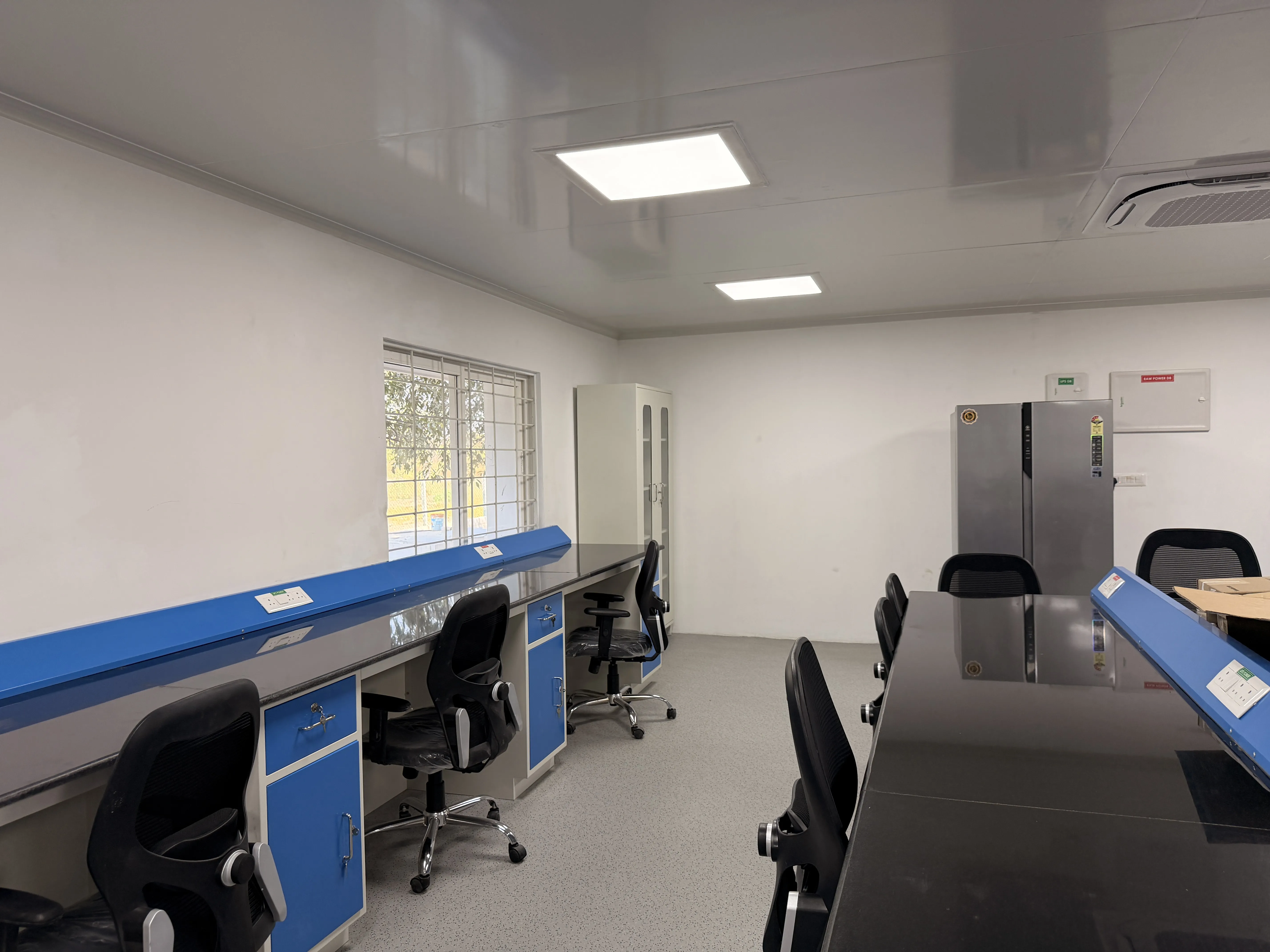
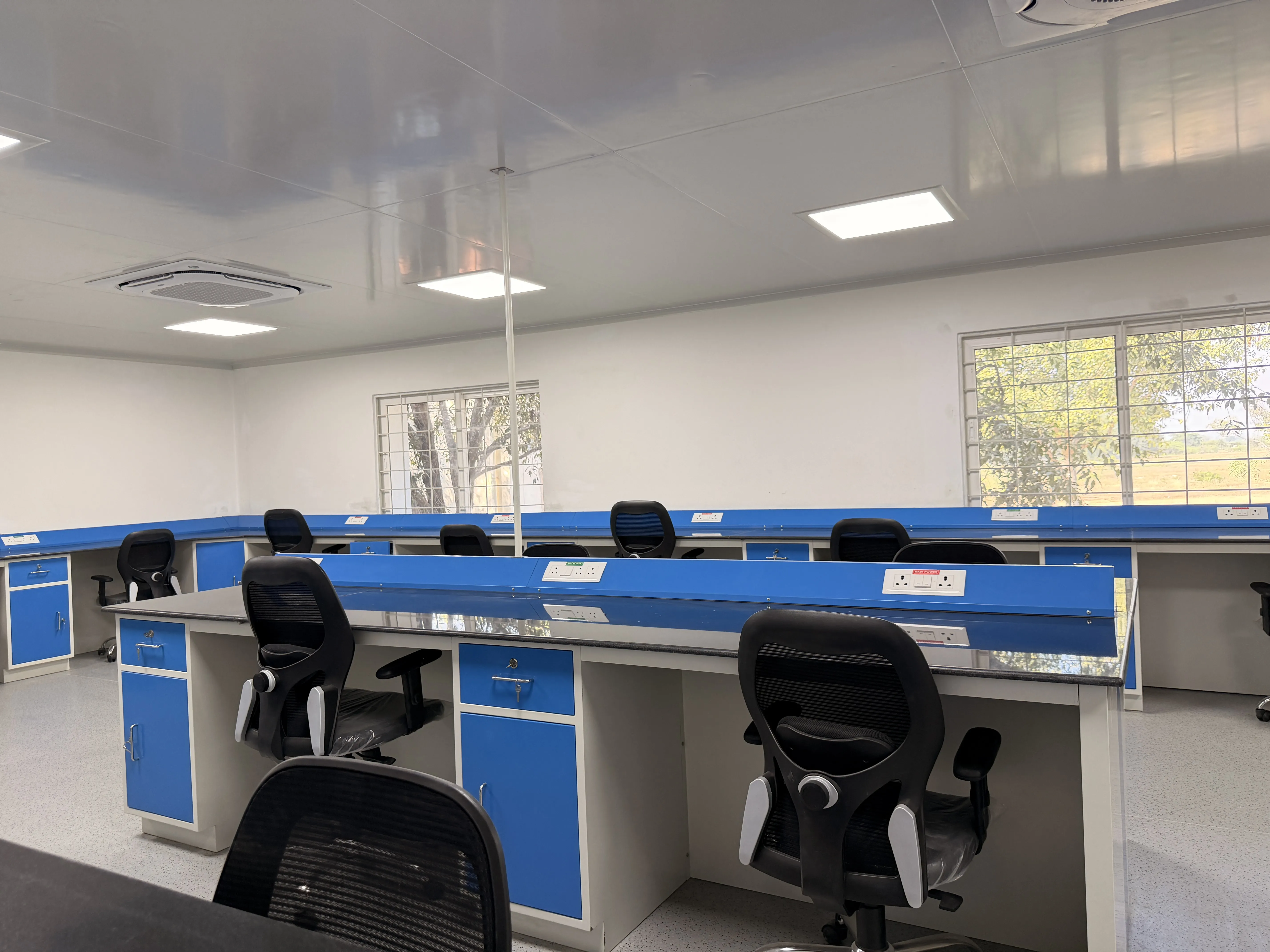
Lab Furniture

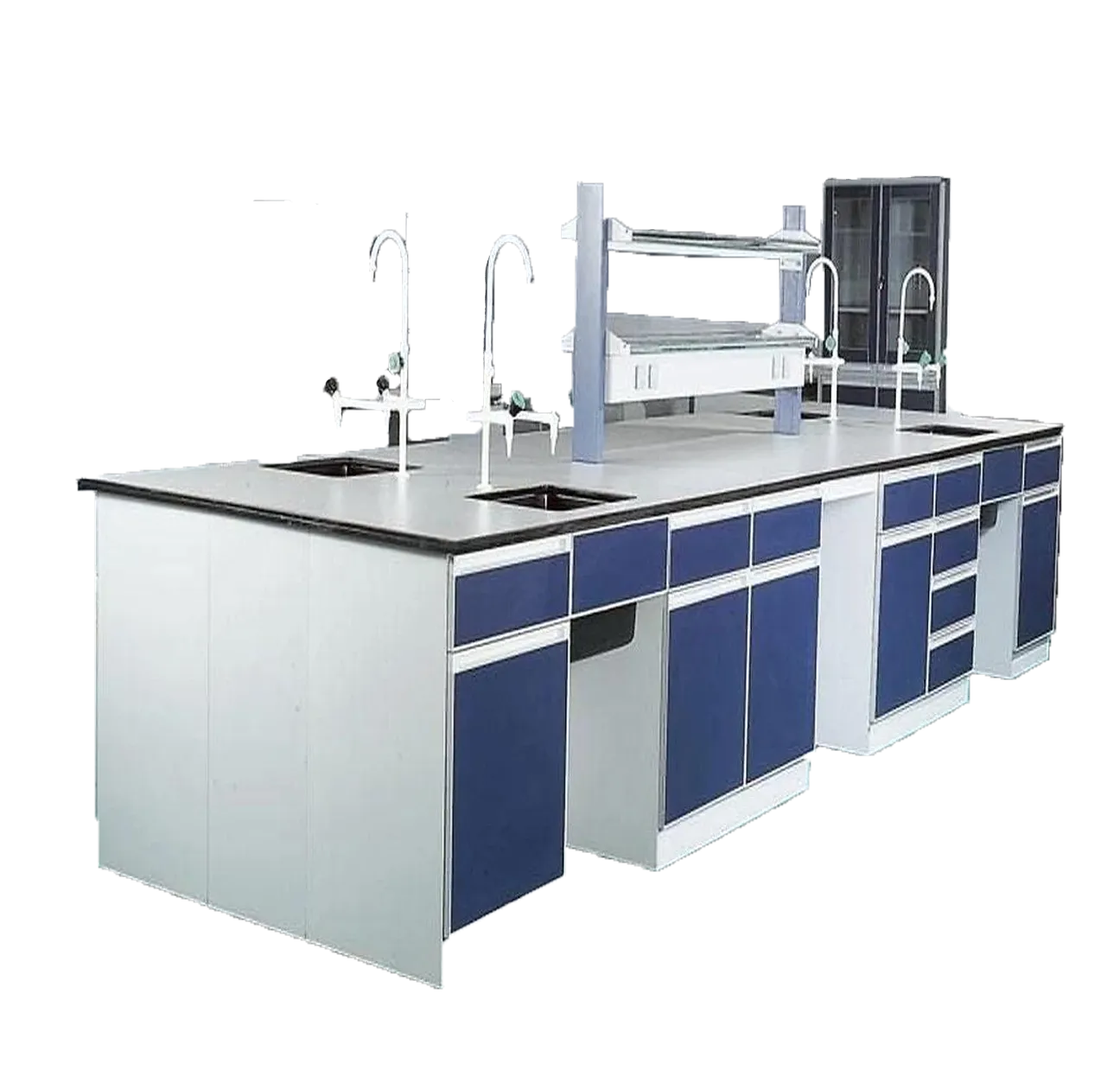
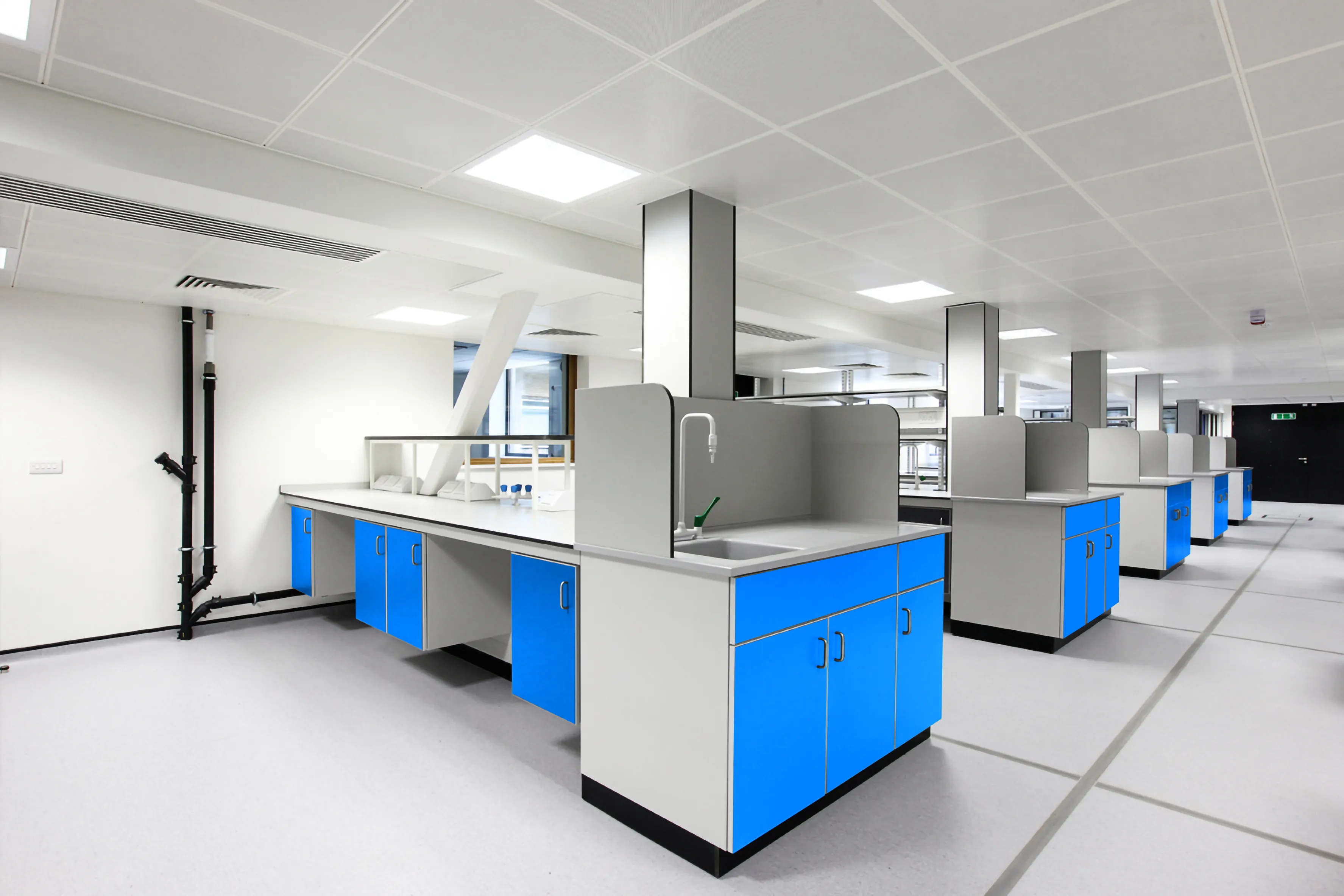
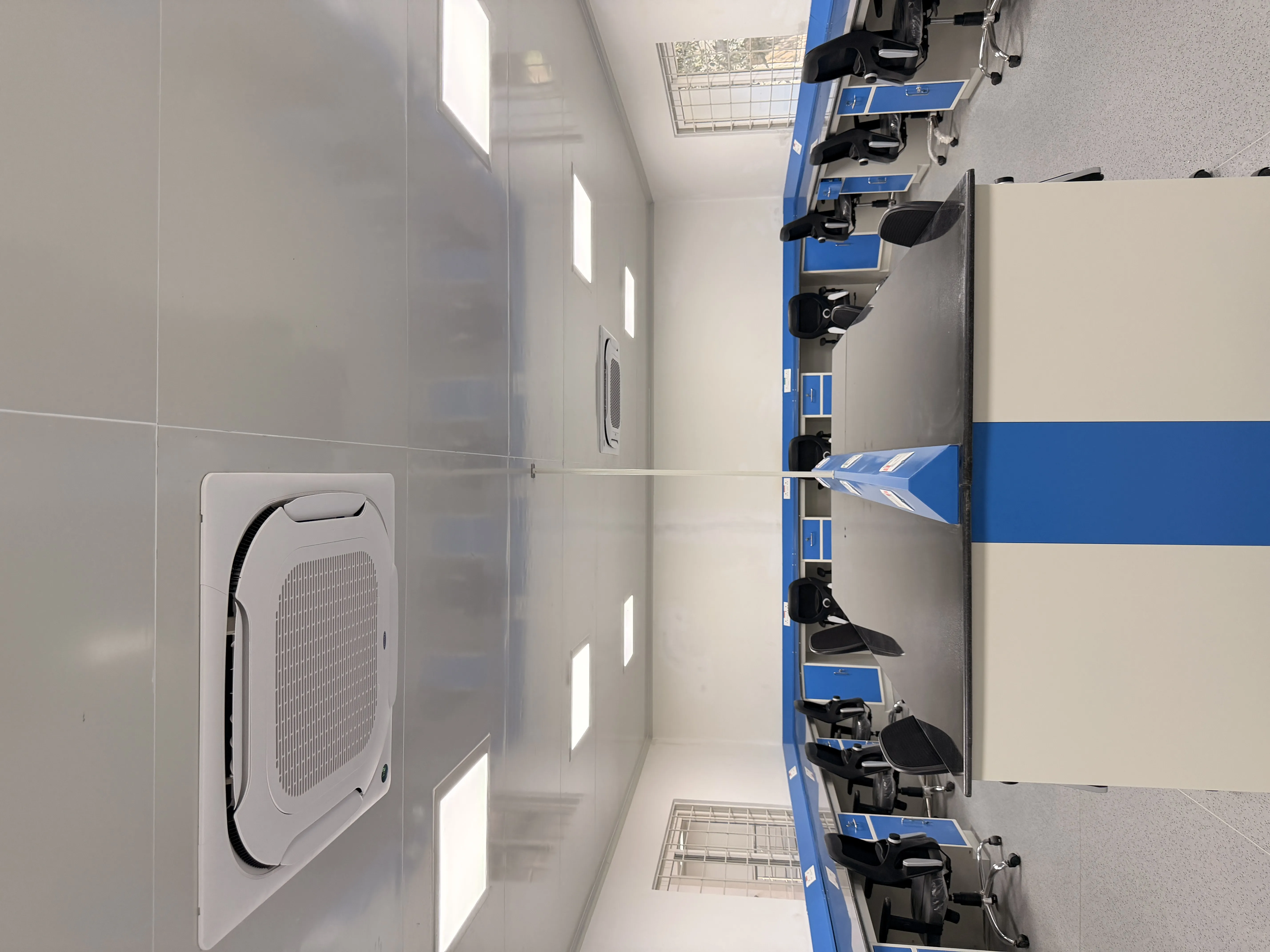
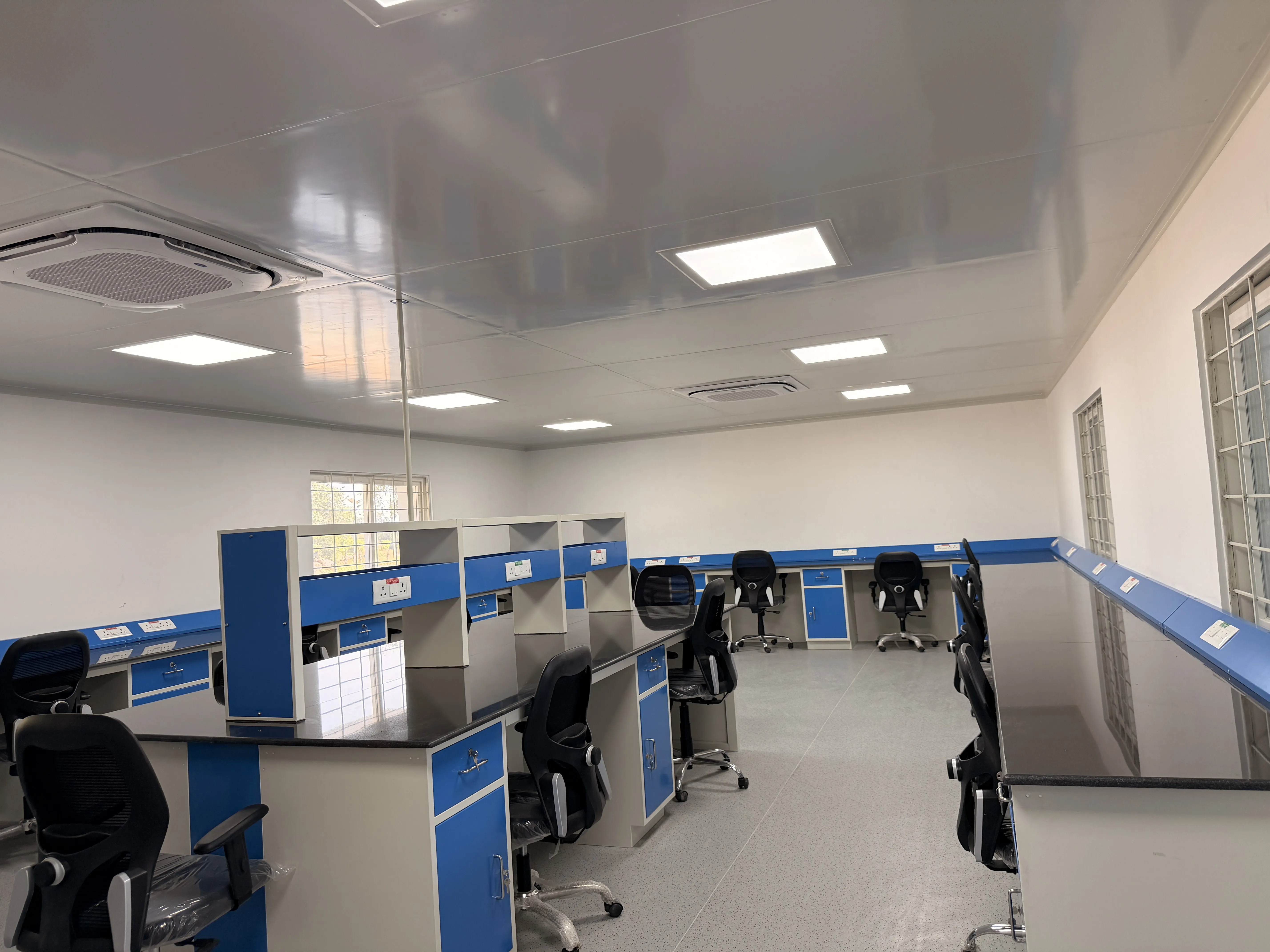
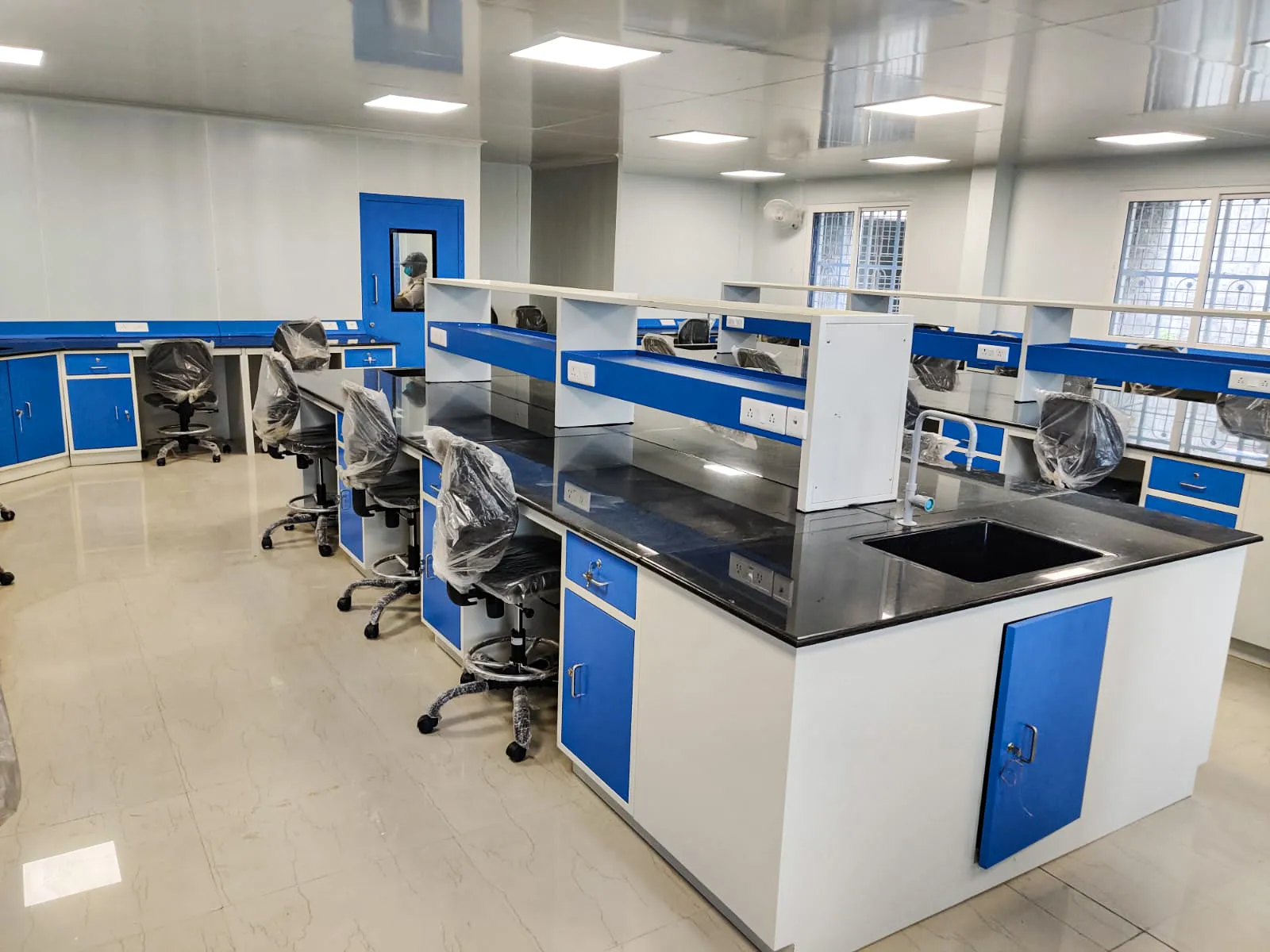
Island Modular Laboratory Table

Island Modular Laboratory Table

  • Modular workstation with chemical resistant top
  • Provision for reagent racks, gas/water valves, and electrical points
  • GI powder coated or SS-304/316 construction
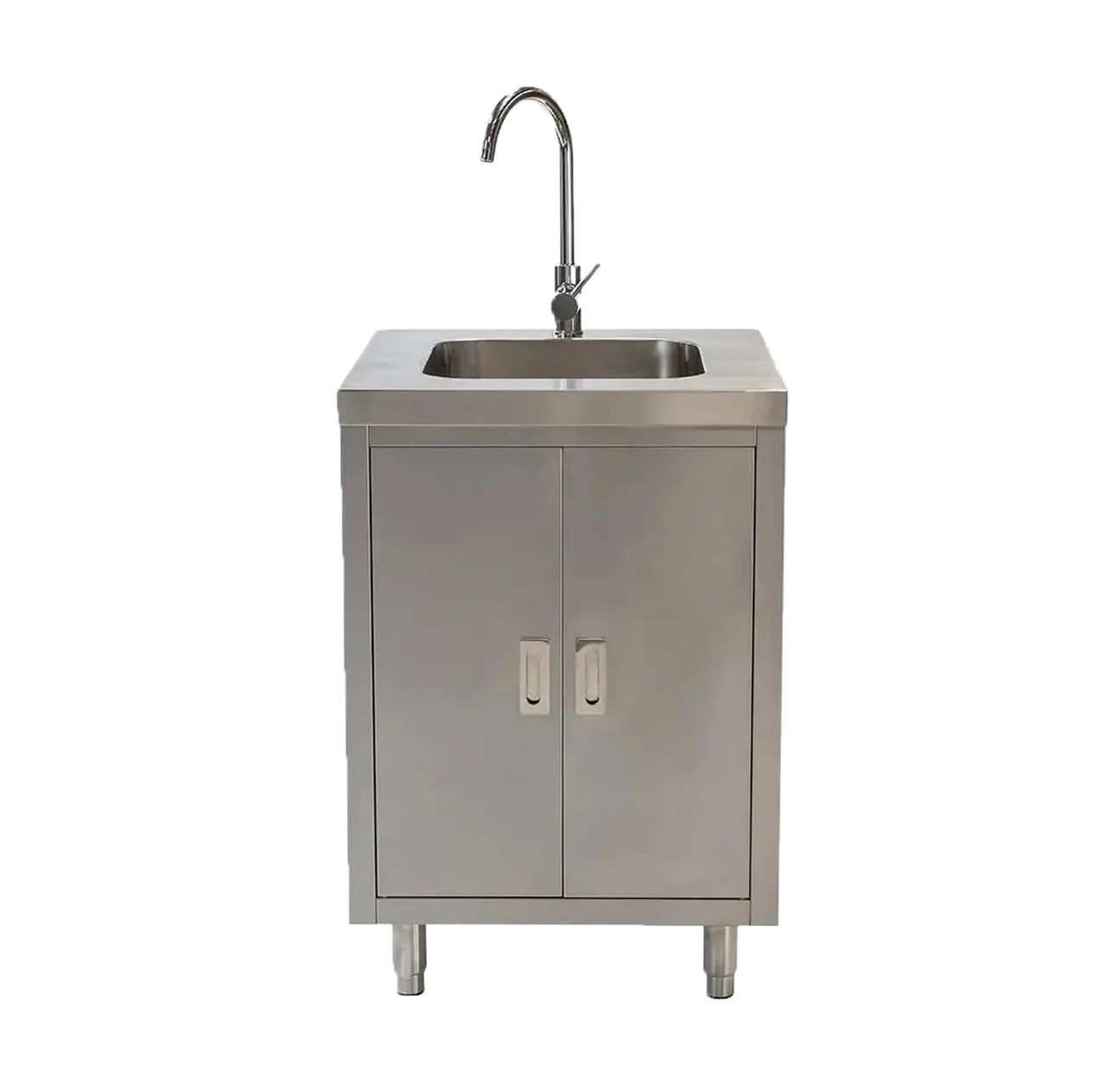
Sink Storage

Sink Storage

  • SS/GI cabinet with integrated sink arrangement
  • Corrosion resistant and easy to clean surface
  • Plumbing and drainage provision included
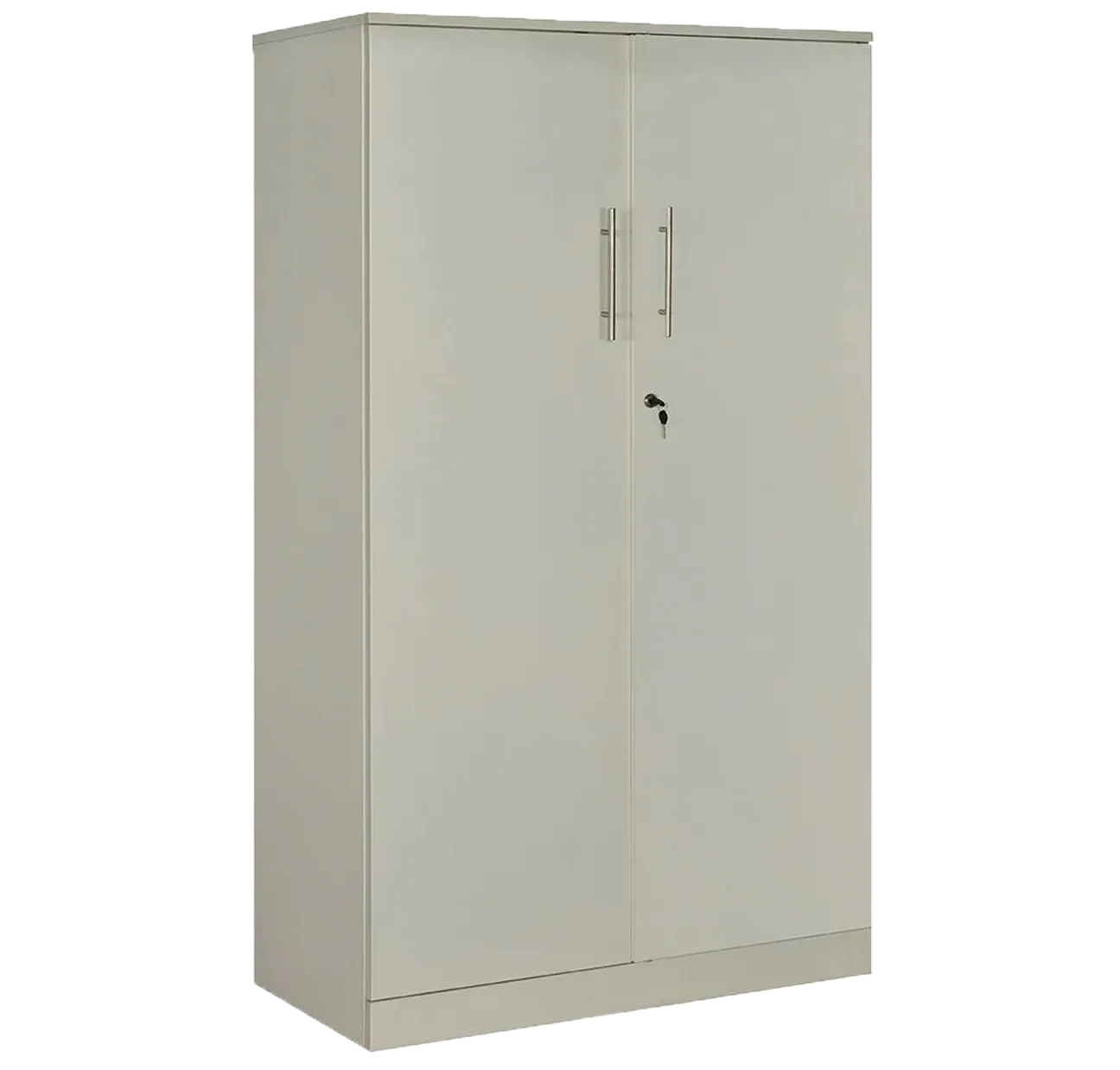
Unit Cabinet Rack

Unit Cabinet Rack

  • Modular storage cabinet with adjustable shelves
  • GI powder coated or SS-304/316 construction
  • Smooth finish with lockable door provision
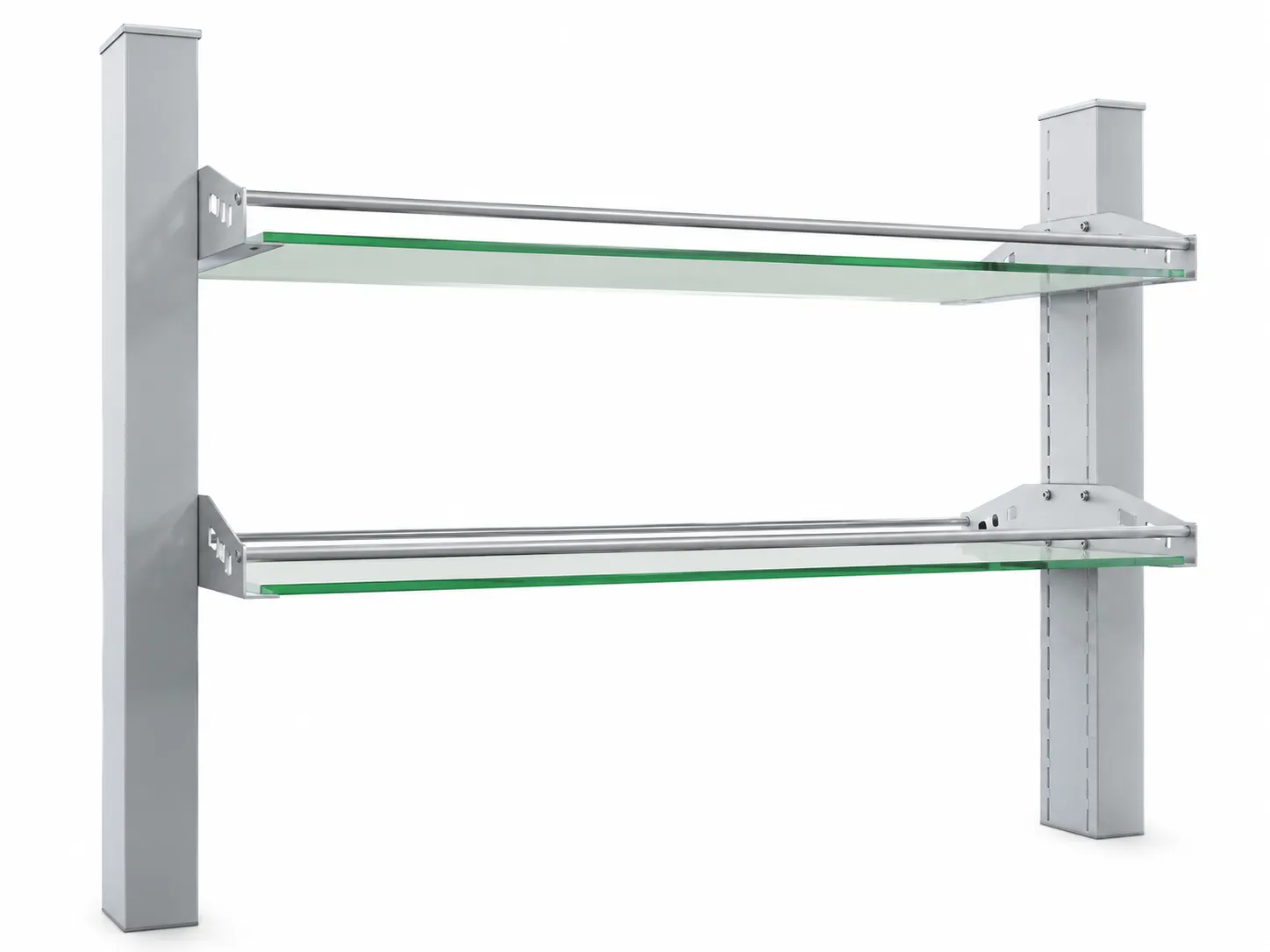
Reagent Rack

Reagent Rack

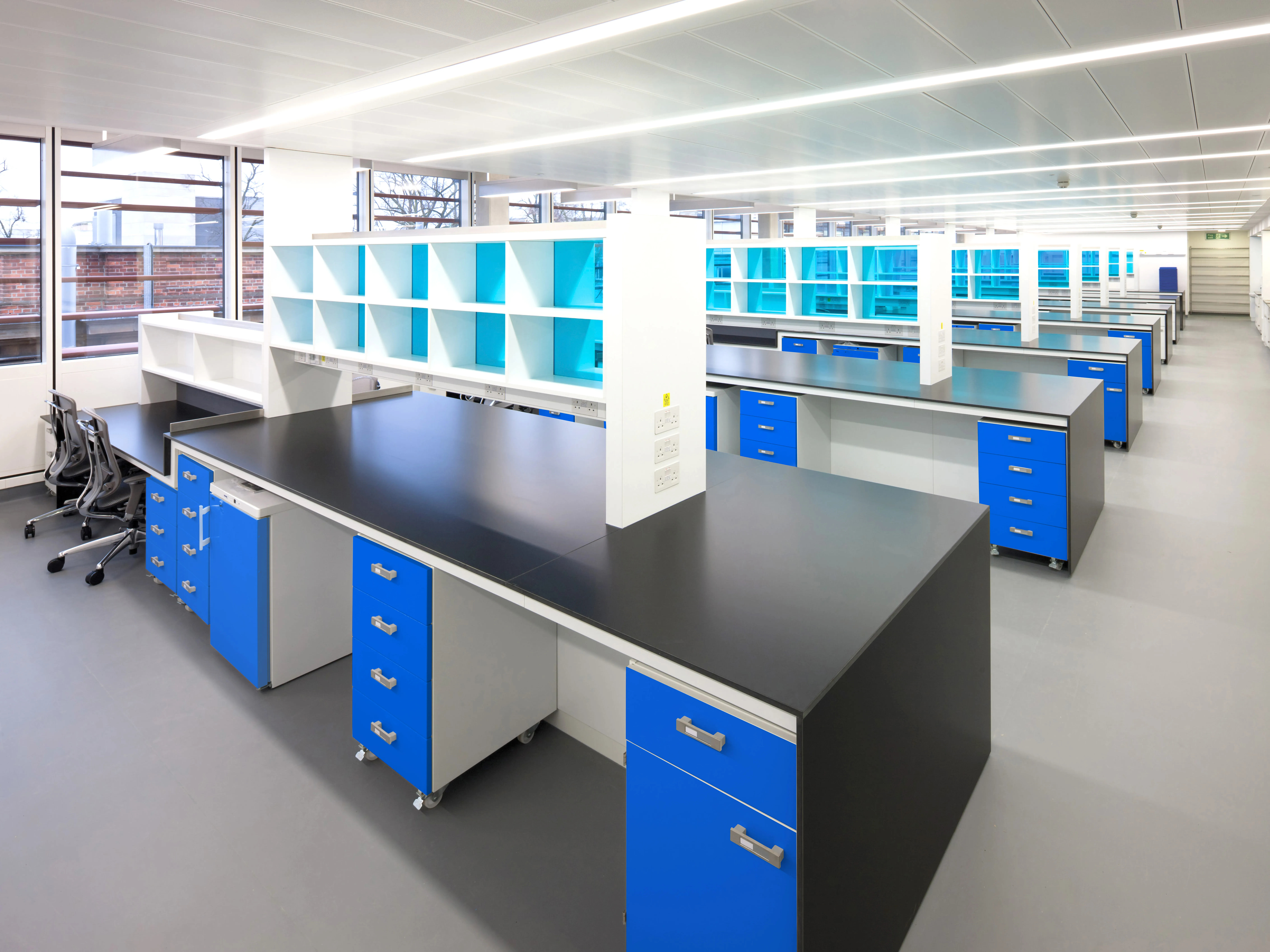
  • Multi-tier reagent storage arrangement
  • Provision for electrical and utility fittings
  • Durable GI powder coated or SS construction
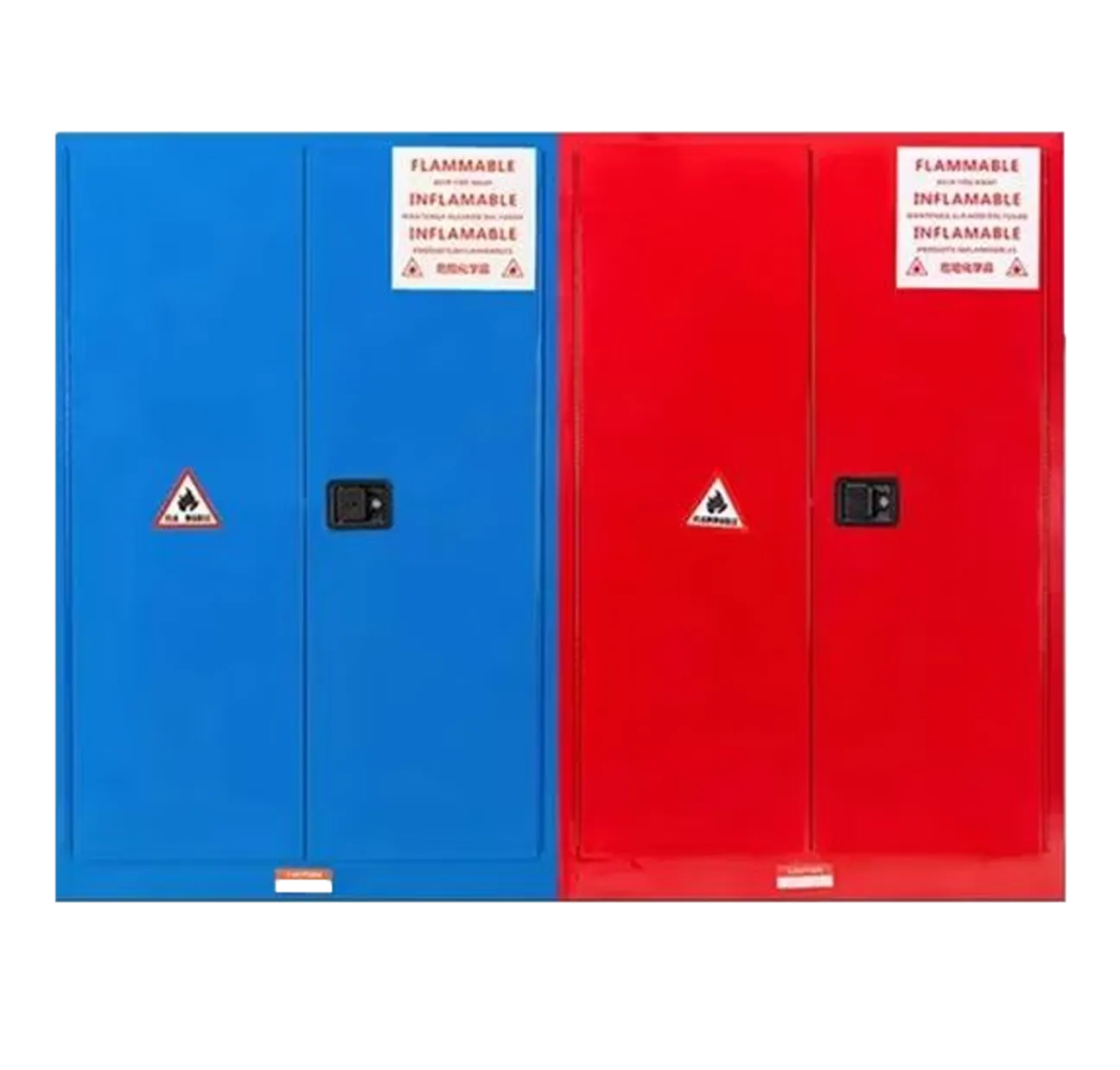
Chemical Resistant Cabinet with Exhaust

Chemical Resistant Cabinet with Exhaust

  • Chemical resistant storage cabinet with exhaust system
  • GI powder coated/SS construction
  • Safe storage for hazardous chemicals and solvents
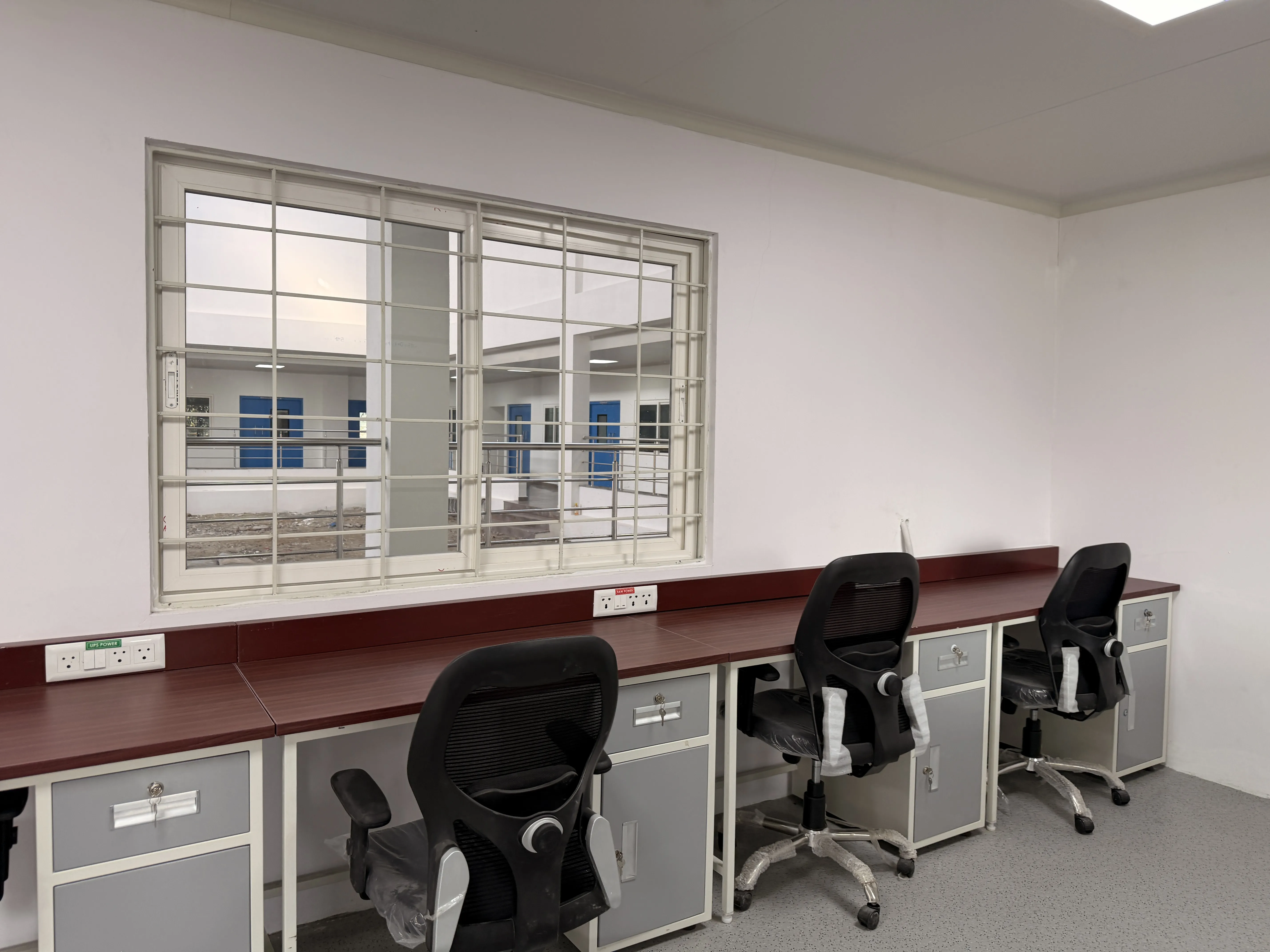
Office Furniture

Office Furniture

  • Ergonomic and modular furniture design
  • Durable powder coated/laminated finish
  • Suitable for office and laboratory environments
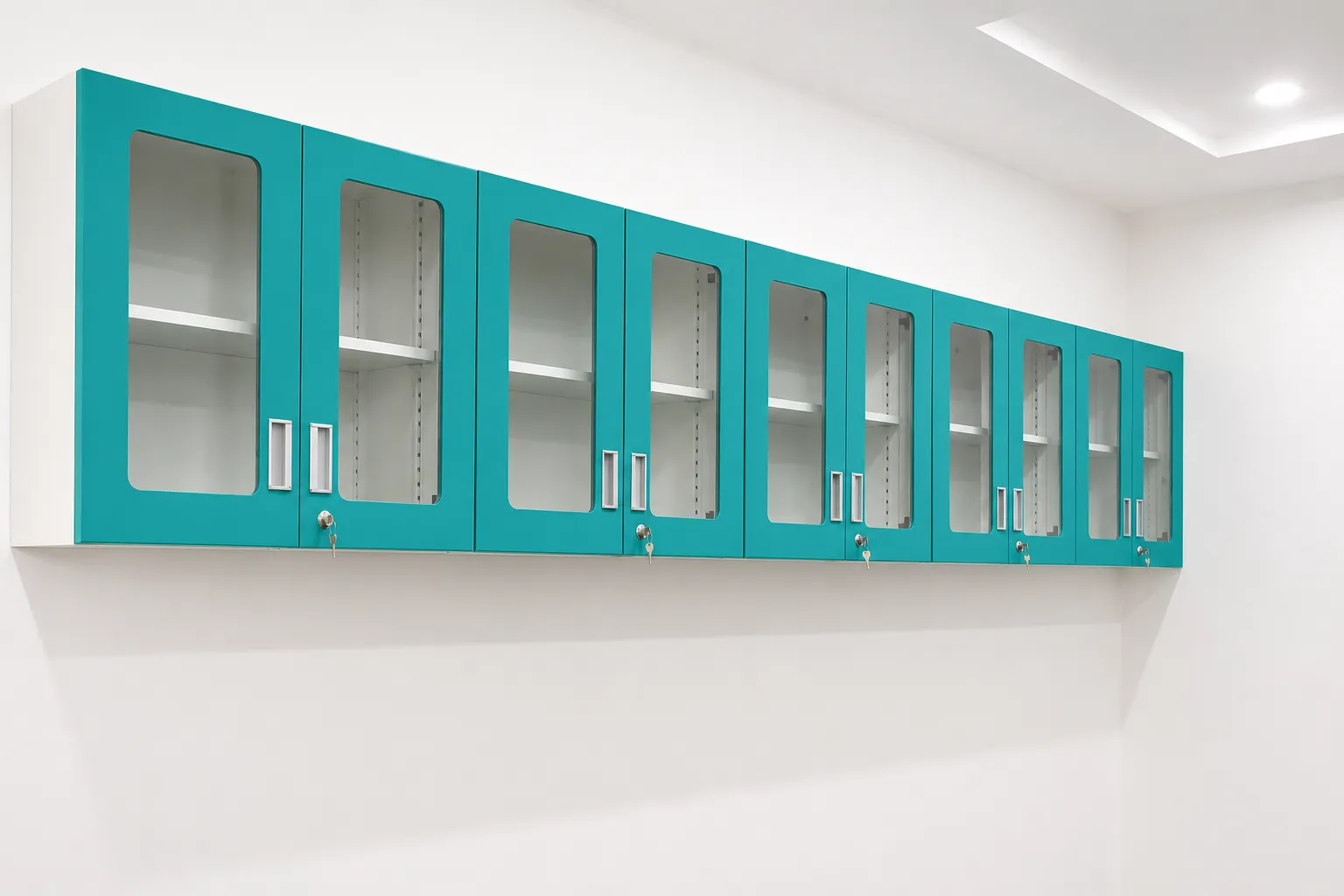
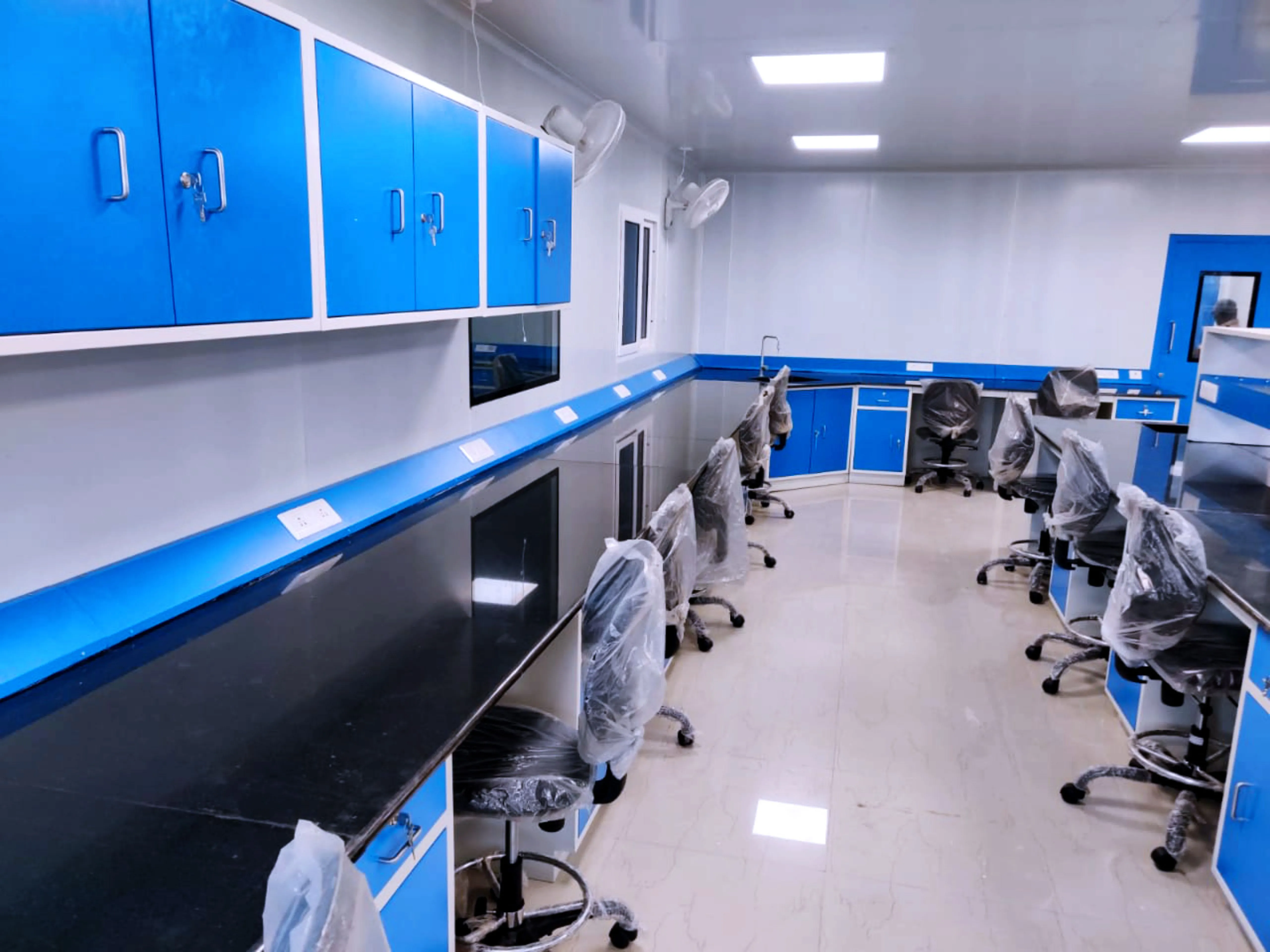
Wall Cabinets

Wall Cabinets

  • Wall mounted modular storage cabinet system
  • GI powder coated or SS construction
  • Smooth finish with adjustable shelf provision
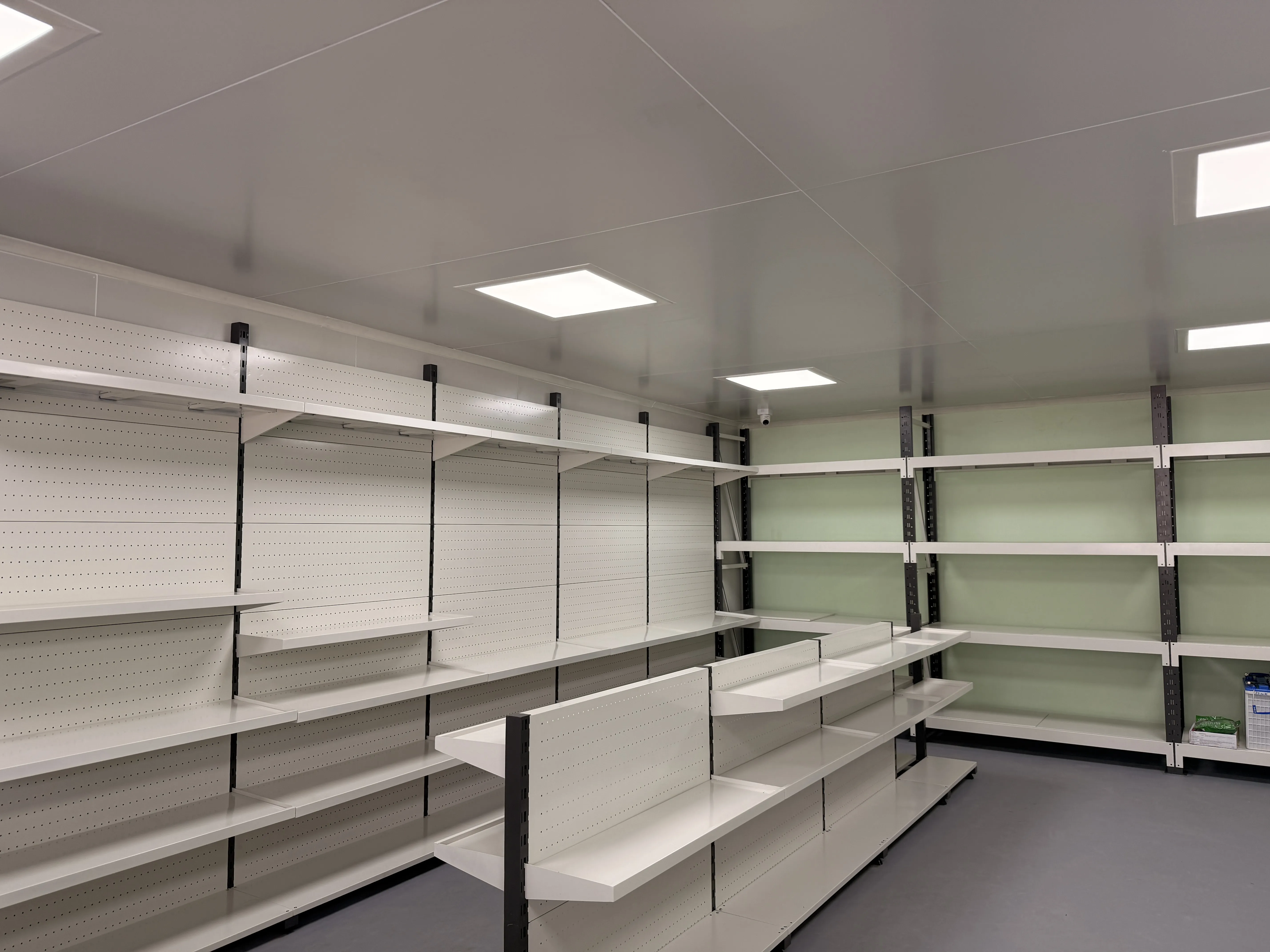
Retail Store Racks

Retail Store Racks

  • Heavy duty modular rack construction
  • Adjustable shelf arrangement
  • Powder coated durable finish
Available in custom sizes, shapes, and colours. Includes reagent racks, water/gas valves, and electrical points. Fabricated using GI (powder-coated) or stainless steel (SS-304/316).

Our Work

Real projects delivered by our team.

Modular Laboratory Furniture for Research, Healthcare & Industrial Laboratories in Bangalore

Laboratory furniture is not generic office infrastructure. It is a performance-critical component of the laboratory environment — directly affecting workflow efficiency, personnel safety, contamination control, compliance with laboratory safety standards, and the long-term operational integrity of the facility. For pharmaceutical companies, biotechnology firms, hospitals, food testing laboratories, chemical industries, educational institutions, and industrial R&D facilities, the quality and configuration of laboratory furniture determines whether a laboratory functions as designed or introduces operational risk.

S.M. Enterprises is a laboratory furniture manufacturer in Bangalore with in-house design, fabrication, and installation capabilities, supplying modular laboratory furniture across Karnataka and South India. Every product is fabricated to site-specific requirements in GI powder-coated or SS-304/316 construction, selected based on the chemical exposure, load requirements, and cleanliness classification of the target environment.

01

Laboratory Workstations and Benches Designed for the Task

Laboratory workstations are the primary functional surface in any laboratory and must be specified to match the exact activities performed on them. S.M. Enterprises manufactures laboratory benches and island modular laboratory tables with chemical resistant tops capable of withstanding acids, alkalis, solvents, and reagents commonly used in pharmaceutical and chemical laboratories. Each workstation is designed with provision for reagent racks, water and gas valves, drainage, and electrical points — integrating services directly into the bench structure to eliminate cable clutter and reduce ergonomic strain on laboratory personnel.

For laboratories requiring central workstation arrangements, island bench configurations allow multi-user access from all four sides, supporting collaborative workflows in research, quality control, and testing environments. Laboratory benches along perimeter walls can be specified with overhead wall cabinets and reagent racks mounted at appropriate working height, creating a continuous, organised laboratory casework system that maximises usable bench area while maintaining clear access corridors.

02

Laboratory Storage Systems That Support Safety and Compliance

Uncontrolled chemical storage is a primary source of laboratory incidents. S.M. Enterprises manufactures a range of laboratory storage systems designed to address chemical segregation, access control, and contamination risk. The chemical resistant cabinet with exhaust is specifically designed for the safe storage of hazardous chemicals and volatile solvents, with a built-in exhaust connection that prevents vapour accumulation within the storage zone — a requirement under laboratory safety standards for facilities handling flammable or toxic materials.

Unit cabinet racks with adjustable shelves and lockable door provision offer general-purpose laboratory casework storage for glassware, consumables, and non-hazardous materials. Reagent racks, integrated into workstation or wall systems, provide organised, multi-tier chemical storage at the point of use, reducing unnecessary movement and minimising the risk of chemical spills during transfer. Sink storage units with integrated SS sinks, plumbing, and drainage provision support wash-down stations within the laboratory without requiring separate civil construction.

03

Cleanroom Compatible and Ergonomic Laboratory Furniture

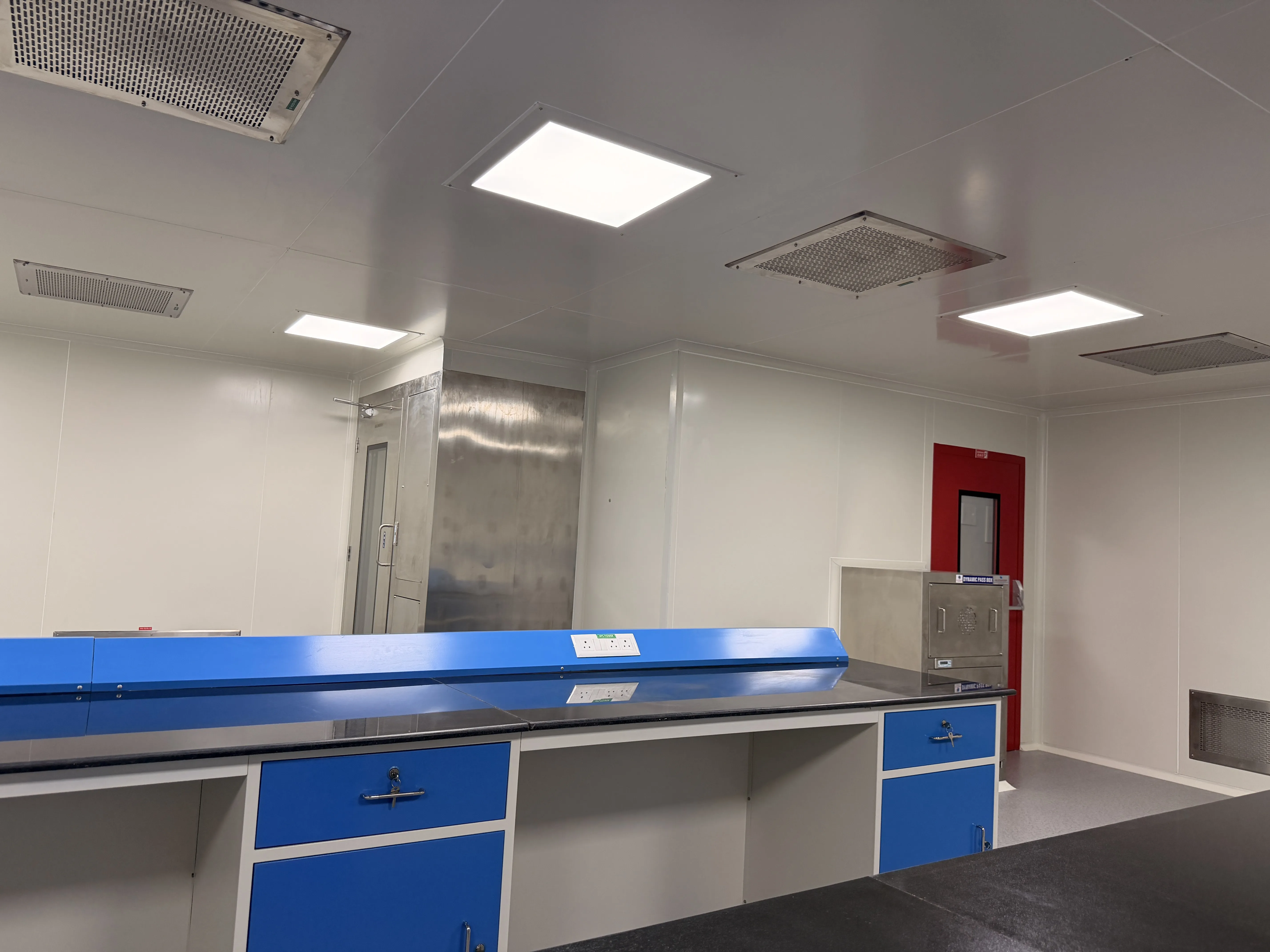
For pharmaceutical manufacturing support laboratories, biotechnology cleanrooms, and hospital pathology labs, furniture must meet cleanroom compatible laboratory furniture specifications — surfaces that are non-shedding, easy to decontaminate, resistant to cleaning agents, and free of crevices that can harbour particulate contamination. S.M. Enterprises manufactures laboratory furniture in SS-304 and SS-316 for cleanroom and controlled environments, with smooth weld finishes and sealed joints that meet the surface hygiene requirements of ISO-classified laboratory spaces.

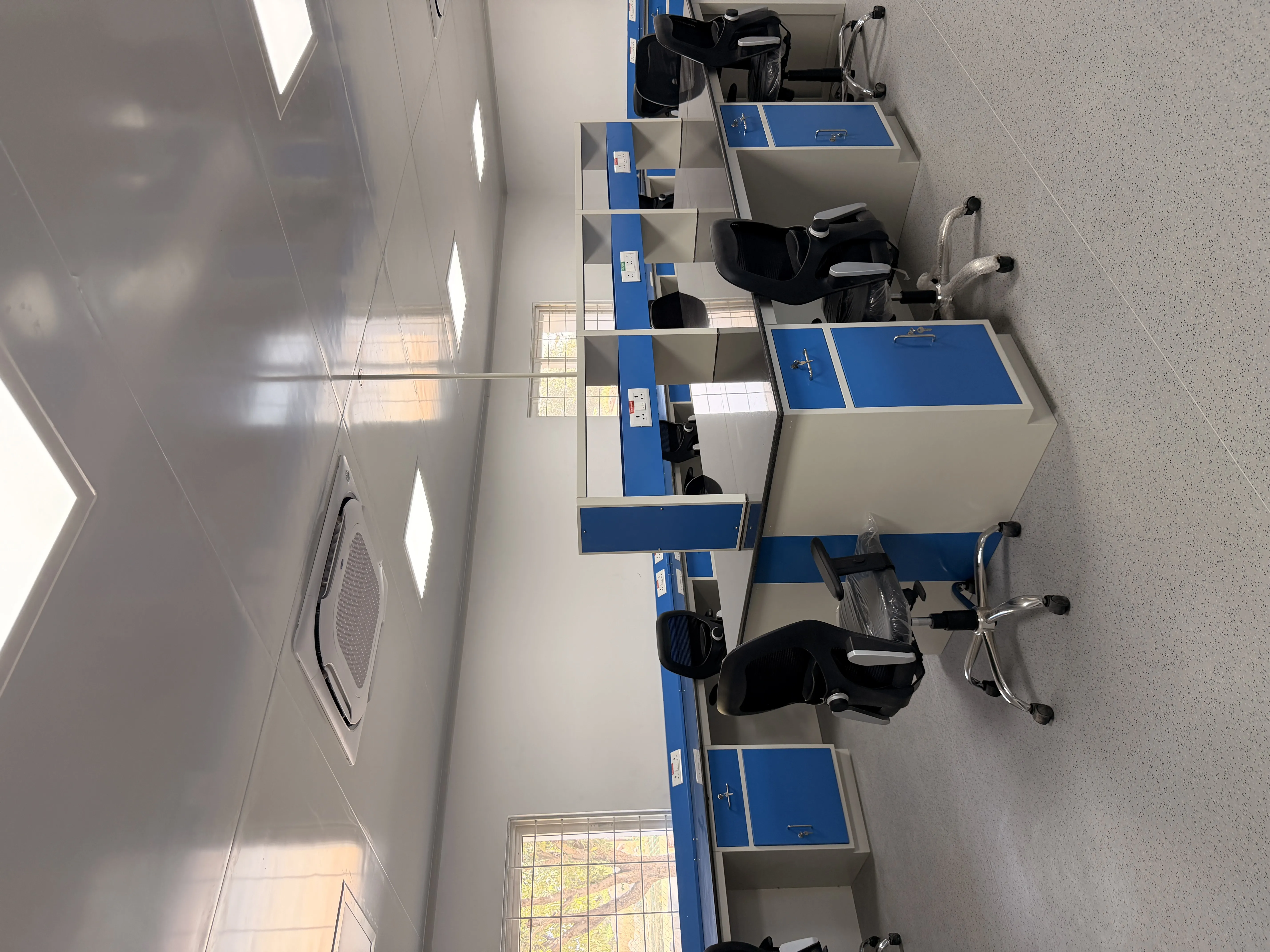
Laboratory ergonomic workstations are configured with adjustable heights, appropriate under-bench clearances, and task-specific surface extensions to reduce musculoskeletal strain during prolonged laboratory work — a factor increasingly specified by occupational health consultants and EPC contractors during laboratory planning and fit-out.

04

Laboratory Infrastructure Solutions for Bangalore and Across Karnataka

Bangalore's concentration of pharmaceutical manufacturers, biotech firms, hospitals, research institutions, and industrial laboratories makes it one of the highest-demand markets for laboratory infrastructure solutions in South India. S.M. Enterprises supports laboratory setup solutions end-to-end — from initial laboratory furniture layout planning and fabrication through to on-site installation and commissioning — as a single-source laboratory furniture supplier in Bangalore.

Businesses, research institutions, hospitals, universities, pharmaceutical manufacturers, and industrial organisations planning new laboratory construction, laboratory expansion, or furniture replacement are invited to contact S.M. Enterprises for a detailed technical consultation and project-specific quotation. Call +91 82964 97411 or submit your requirements through the enquiry form on this page.
Need a Custom Quote for Lab Furniture?

Our experts will respond within 24 hours with detailed specifications and pricing.

Talk to an Expert

Frequently Asked Questions

01

What is laboratory furniture, and what does it typically include?

Laboratory furniture refers to purpose-built workstations, benches, storage cabinets, and utility fittings designed to support scientific, diagnostic, or quality control work, rather than general office or household furniture. It is engineered to withstand chemical exposure, frequent cleaning, and integration with lab utilities.

A typical laboratory furniture setup includes island or wall-mounted workbenches, storage cabinets and racks for reagents and equipment, sink units with plumbing, and chemical-resistant cabinets for hazardous material storage. Many pieces also include provision for gas valves, water points, and electrical outlets built directly into the bench structure.

Because laboratories vary widely by function — research, quality control, diagnostics, or teaching — laboratory furniture is generally selected and configured around the specific workflow, equipment, and chemical exposure of each space rather than supplied as generic fixtures.

02

What is the difference between an island bench and a wall bench in laboratory design?

An island bench is a freestanding workstation positioned away from the walls, accessible from all sides, which allows multiple people to work around it simultaneously. Island benches are typically used in larger labs where collaborative work or equipment access from multiple angles is needed, and they often include a central utility spine for gas, water, and electrical points.

A wall bench is fixed against a wall, with utilities typically run through the wall behind it, making it more space-efficient for smaller rooms or perimeter workstations. Wall benches are common where floor space is limited or where a room combines several distinct work zones along its perimeter.

The choice between the two depends on room layout, staffing patterns, and workflow — island benches suit open, collaborative lab floors, while wall benches maximize usable floor area in compact spaces.

03

What materials are commonly used for laboratory furniture, and how do they compare?

Laboratory furniture is fabricated from a range of materials depending on chemical exposure and hygiene requirements. Stainless steel (commonly SS-304 or SS-316) offers strong corrosion resistance and a smooth, easy-to-clean surface, making it suitable for labs handling corrosive chemicals or requiring high hygiene standards. Galvanized iron (GI) with a powder-coated finish provides good durability and chemical resistance at a lower cost, making it a common choice for general laboratory and storage furniture.

Other materials used across the industry include high-pressure laminate (HPL) and Trespa for worktops in lower-exposure settings, and epoxy resin worktops, which offer high chemical and heat resistance for benches handling aggressive reagents.

Material selection ultimately depends on the specific chemicals used, cleaning frequency, and budget, since higher chemical resistance generally comes with a higher material cost.

04

What is a chemical-resistant cabinet with exhaust, and when is it required?

A chemical-resistant cabinet with exhaust is a storage unit built to safely contain hazardous chemicals and solvents, combining chemically resistant internal surfaces with a connected exhaust system that continuously removes fumes from inside the cabinet. This prevents the buildup of volatile vapors that could pose a health or fire risk if allowed to accumulate in an enclosed space.

These cabinets are typically required wherever flammable solvents, corrosive acids, or other hazardous chemicals are stored in quantities beyond what a standard closed cabinet can safely contain. Laboratories handling organic solvents, quality control labs testing reactive substances, and pharmaceutical facilities storing process chemicals commonly specify this type of storage.

Because exhaust requirements depend on the chemicals stored and their vapor pressure, cabinet ventilation capacity is usually sized based on the specific inventory a lab intends to store.

05

How is utility integration — gas, water, and electrical points — planned in laboratory furniture?

Utility integration refers to building gas valves, water points, and electrical outlets directly into laboratory benches and workstations, rather than running these services separately across the room. This is typically planned during the furniture layout stage, since utility positions need to align with where specific equipment or processes will be located on each bench.

Island benches often route utilities through a central spine running down the middle of the workstation, while wall benches typically bring services through the wall directly behind the bench. Sink units require additional coordination with plumbing and drainage design to ensure proper wastewater handling, particularly for labs disposing of chemical residues.

Planning utility points early, alongside the furniture layout, avoids the need for costly rework if equipment positions or utility requirements change after installation.

06

What is the role of reagent racks in laboratory workstation design?

A reagent rack is a multi-tier storage structure, typically mounted above or integrated into a laboratory bench, designed to keep frequently used reagents, small equipment, and containers within easy reach without occupying bench surface space. This keeps the working area clear for active tasks while maintaining quick access to materials in regular use.

Reagent racks often include provision for electrical fittings, allowing small instruments or lighting to be mounted alongside stored reagents. Their tiered design also helps organize reagents by frequency of use or chemical compatibility, supporting both workflow efficiency and basic safety segregation.

Because reagent racks sit directly above the working bench, their height and shelf spacing are usually planned around the specific equipment and container sizes used at that workstation.

07

Can laboratory furniture be customized to a facility's specific requirements?

Yes. Laboratory furniture such as island benches, storage cabinets, and reagent racks is commonly fabricated in custom sizes, shapes, and finishes to match a lab's room dimensions, workflow, and equipment rather than supplied only in fixed standard configurations. Customization typically covers bench dimensions, material selection (GI powder-coated or SS-304/316), cabinet configuration, and the placement of utility points such as gas valves and electrical outlets.

Custom fabrication is particularly relevant for labs with irregular room shapes, specific equipment integration needs, or workflows requiring non-standard bench heights or storage arrangements.

Manufacturers that fabricate furniture in-house, rather than reselling standardized catalog items, can generally accommodate these site-specific and process-specific requirements more efficiently than off-the-shelf suppliers.

08

What compliance and design standards apply to laboratory furniture selection?

Laboratory furniture selection is generally guided by the broader compliance framework a facility operates under — GMP (Good Manufacturing Practice) for pharmaceutical quality control labs, NABL (National Accreditation Board for Testing and Calibration Laboratories) requirements for testing laboratories, or ISO standards relevant to the lab's specific function.

These frameworks don't typically specify furniture brands or exact designs, but they do influence material choice (smooth, non-porous, easy-to-clean surfaces), utility integration (proper containment for hazardous material storage), and layout (adequate workspace and ventilation around chemical handling areas).

Facilities pursuing NABL accreditation or operating under GMP should confirm specific furniture and layout requirements with their accreditation body or quality consultant, since exact expectations can vary by lab type and the standards or test methods being followed.

09

What factors affect the cost of laboratory furniture?

Material choice is one of the biggest cost drivers — stainless steel (SS-304 or SS-316) furniture generally costs more than GI powder-coated furniture due to its higher corrosion resistance and hygienic finish. Furniture type also matters: benches with integrated utility points (gas, water, electrical) and sink units cost more than basic storage cabinets or racks due to the additional plumbing and wiring involved.

Customization adds further variables — non-standard dimensions, specialized chemical-resistant cabinets with exhaust systems, and higher-tier reagent rack configurations all increase cost compared to standard catalog sizes.

Because laboratory furniture needs vary significantly by facility type and process, accurate cost estimates require a room-specific layout and specification rather than a general price list.

10

What common mistakes occur during laboratory furniture planning?

A frequent mistake is finalizing furniture layout before confirming utility requirements — gas, water, and electrical needs — for the specific equipment that will be used at each workstation, which can lead to utility points that don't align with actual equipment placement. Planning furniture and utility integration together from the start avoids this issue.

Underestimating chemical storage and exhaust requirements is another common error, particularly when labs later introduce new reagents or processes that exceed the original cabinet's ventilation capacity. Selecting furniture material without accounting for actual chemical exposure — choosing GI powder-coated furniture for an area handling corrosive chemicals better suited to stainless steel, for example — can also shorten furniture lifespan.

Involving furniture planning early in the overall lab design process, rather than treating it as a final step after room construction, generally produces a better match between furniture and actual lab workflow.

Other Product Categories

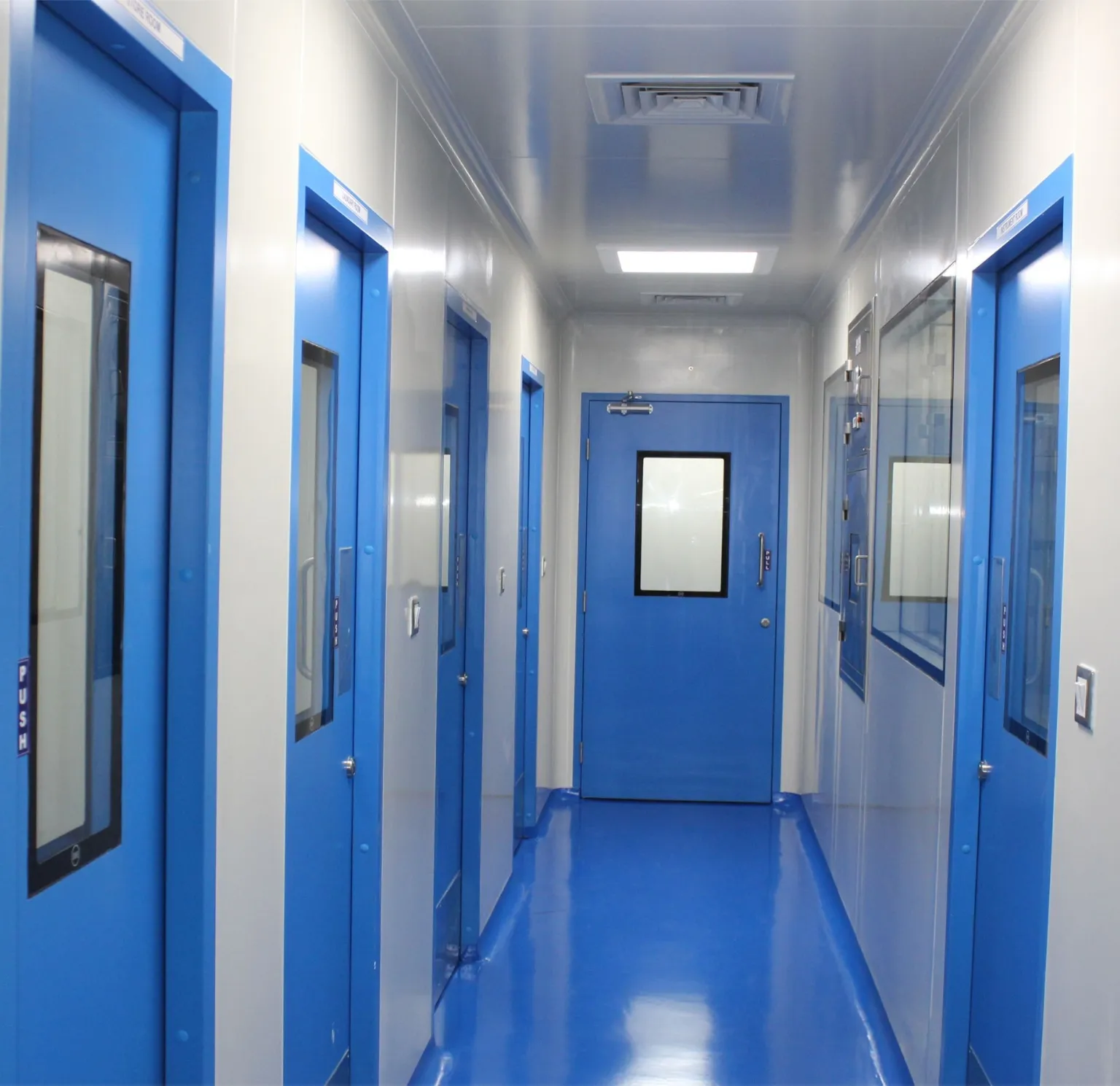
Clean Room Clean Room Solutions
Clean Room Solutions
Complete cleanroom design and build — partitions, equipment, furniture, doors and flooring.
View Details
HVAC HVAC Systems
HVAC Systems
Ducting, AHUs, grills, humidifiers and full HVAC solutions for cleanrooms and hospitals.
View Details
Doors Metal Doors
Metal Doors
Fire-rated, SS, hermetically sealed and automatic sliding doors for all environments.
View Details
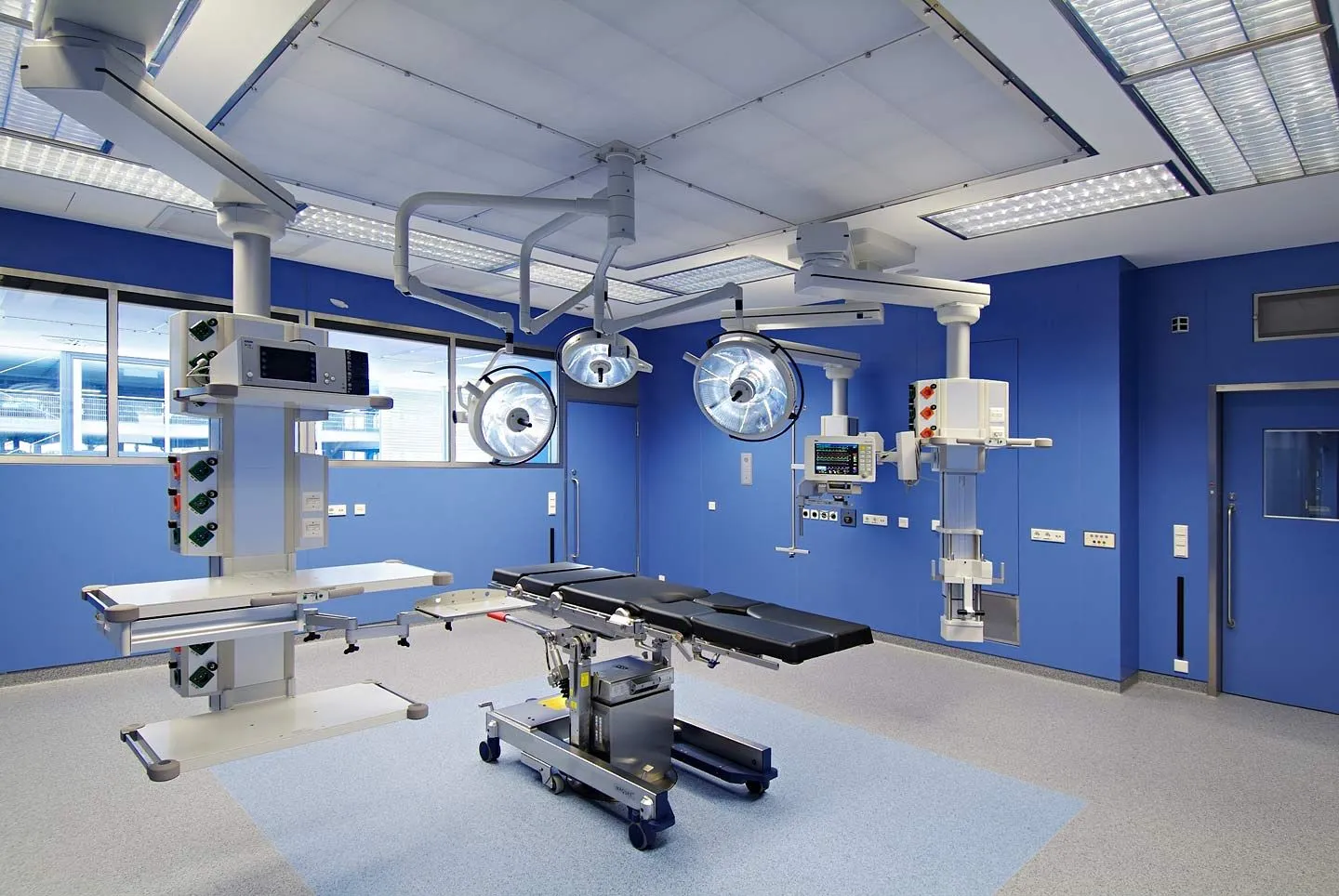
OT & ICU Modular OT & ICU
Modular OT & ICU
Turnkey modular operation theatres and ICU setups compliant with NABH standards.
View Details
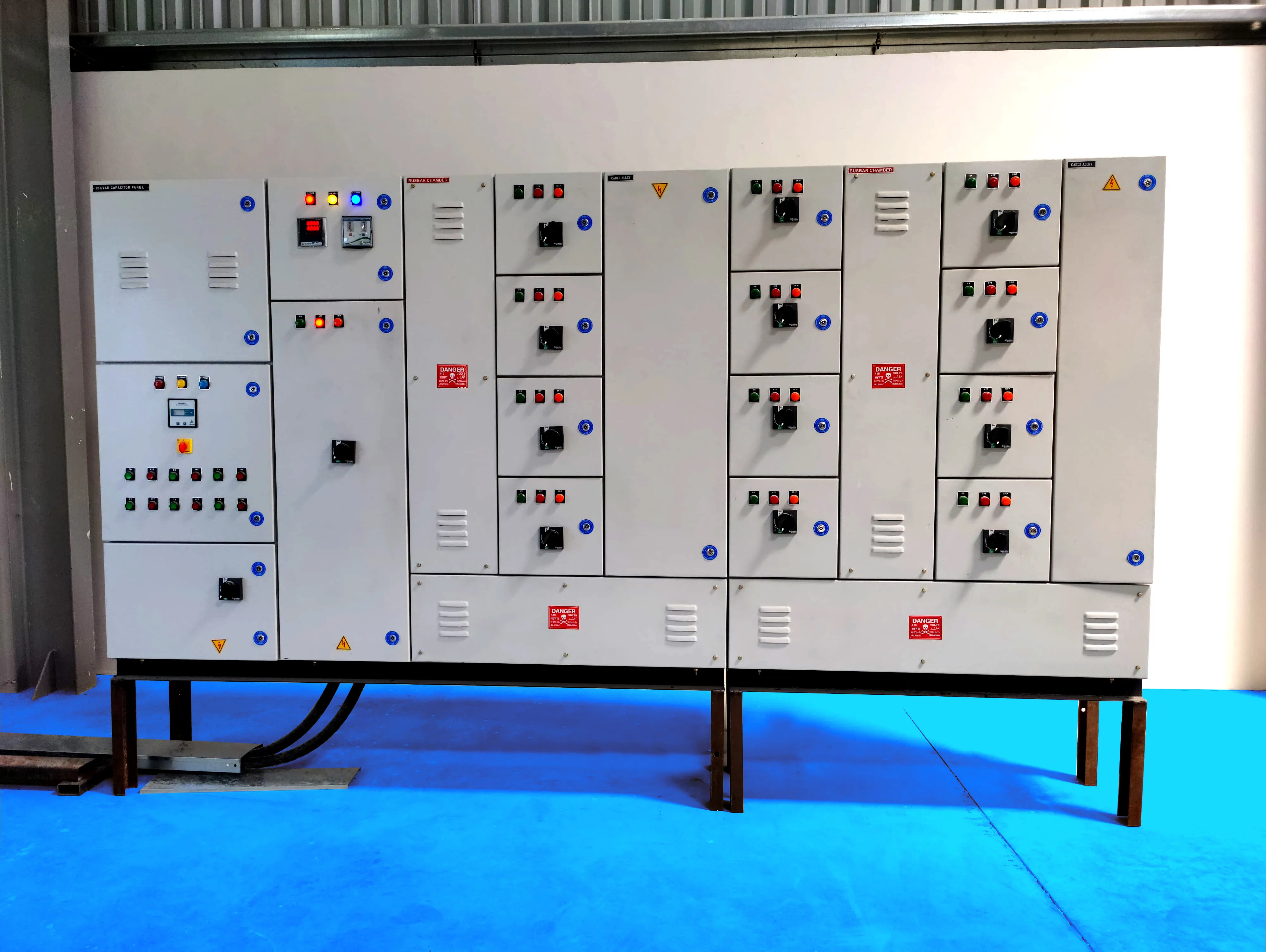
Electrical Electrical
Electrical
VFD, MCC, PCC, APFC panels, UPS systems, cabling and lighting control solutions.
View Details
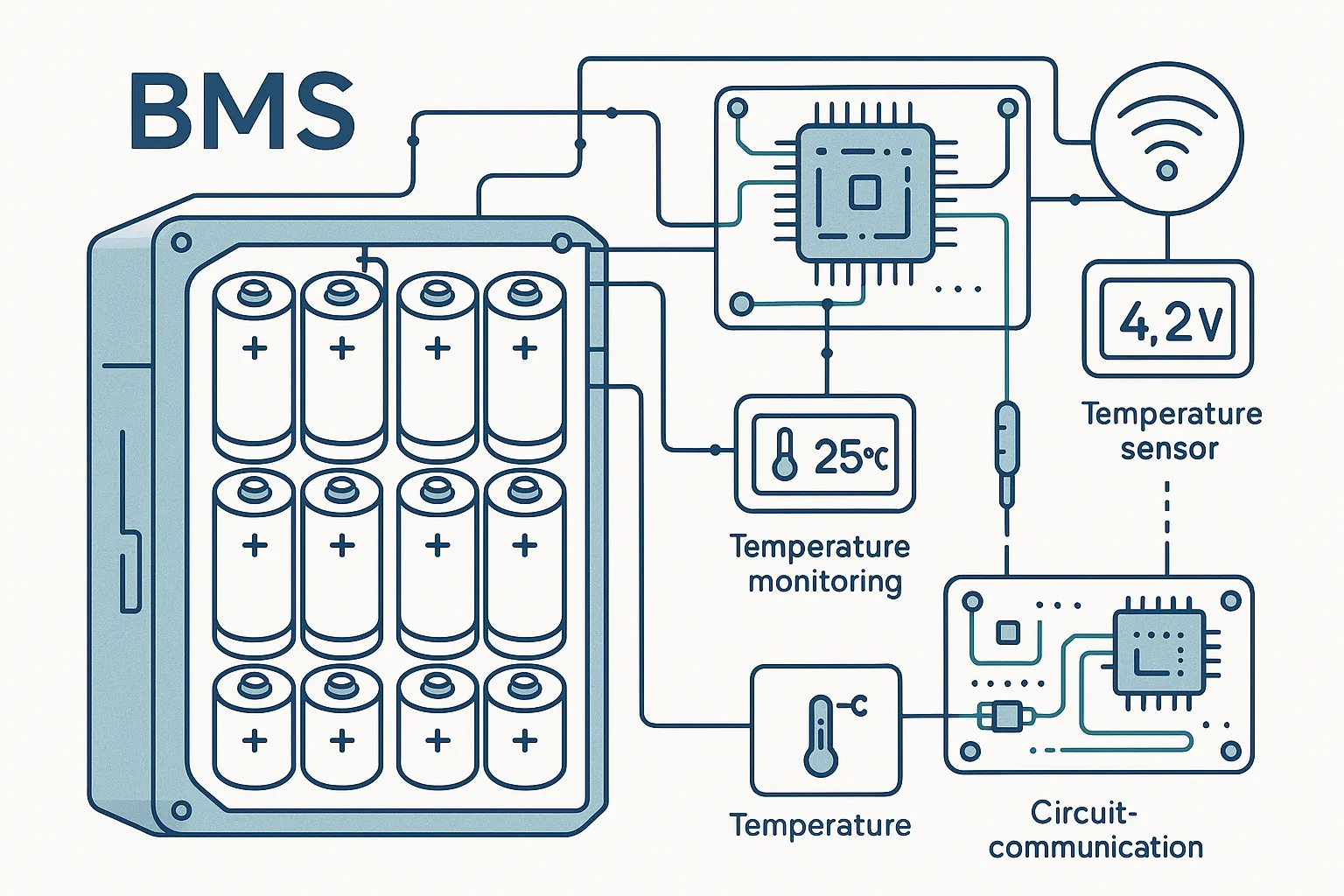
BMS BMS Systems
BMS Systems
Building management systems for centralized monitoring of HVAC, lighting and utilities.
View Details
Construction Construction
Construction
Turnkey civil, MEP, HVAC and cleanroom construction for pharma, hospitals and industry.
View Details
Testing & Validation
Full cleanroom validation — air velocity, particle count, HEPA integrity, DQ/IQ/OQ documentation.
View Details
Flooring
Epoxy and vinyl flooring solutions — seamless, anti-static, chemical resistant for cleanrooms and labs.
View Details

Ready to Upgrade Your Facility?

Get in touch with our experts for a free consultation and competitive quote on modular OTs, clean rooms, and more.

Enquire Now
Call Now