






ISO 14644 & GMP Cleanroom Validation Services in Bangalore
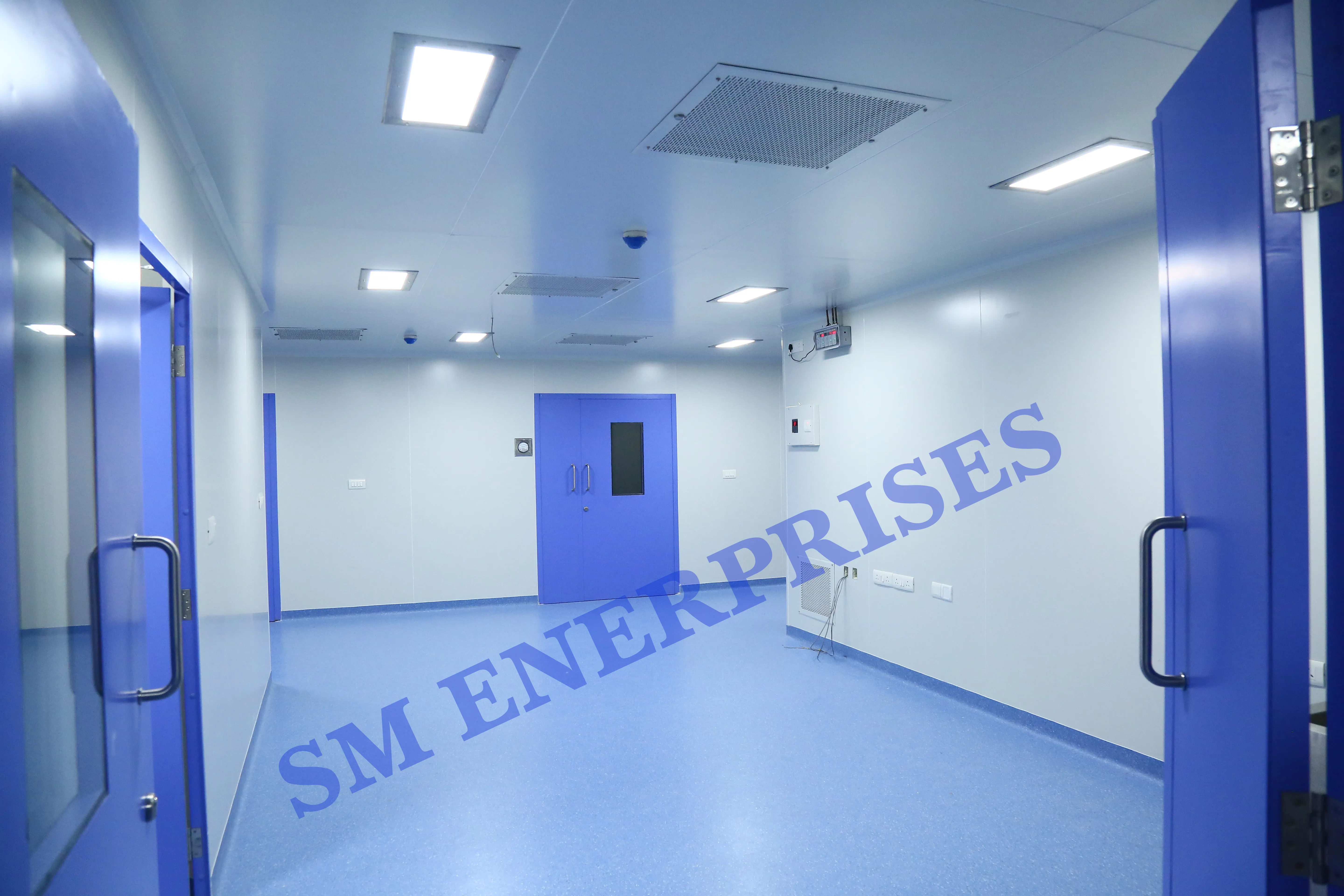
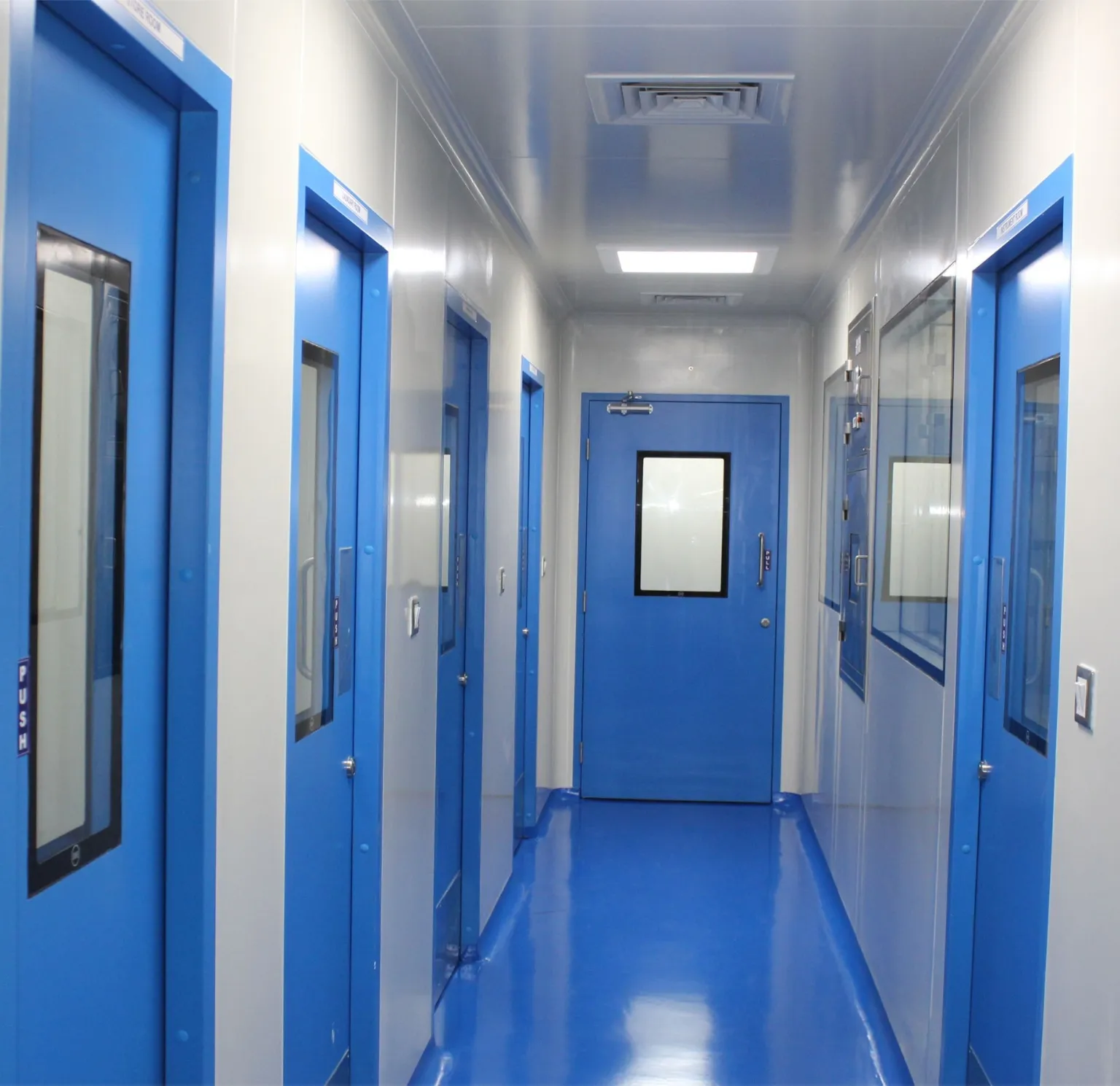
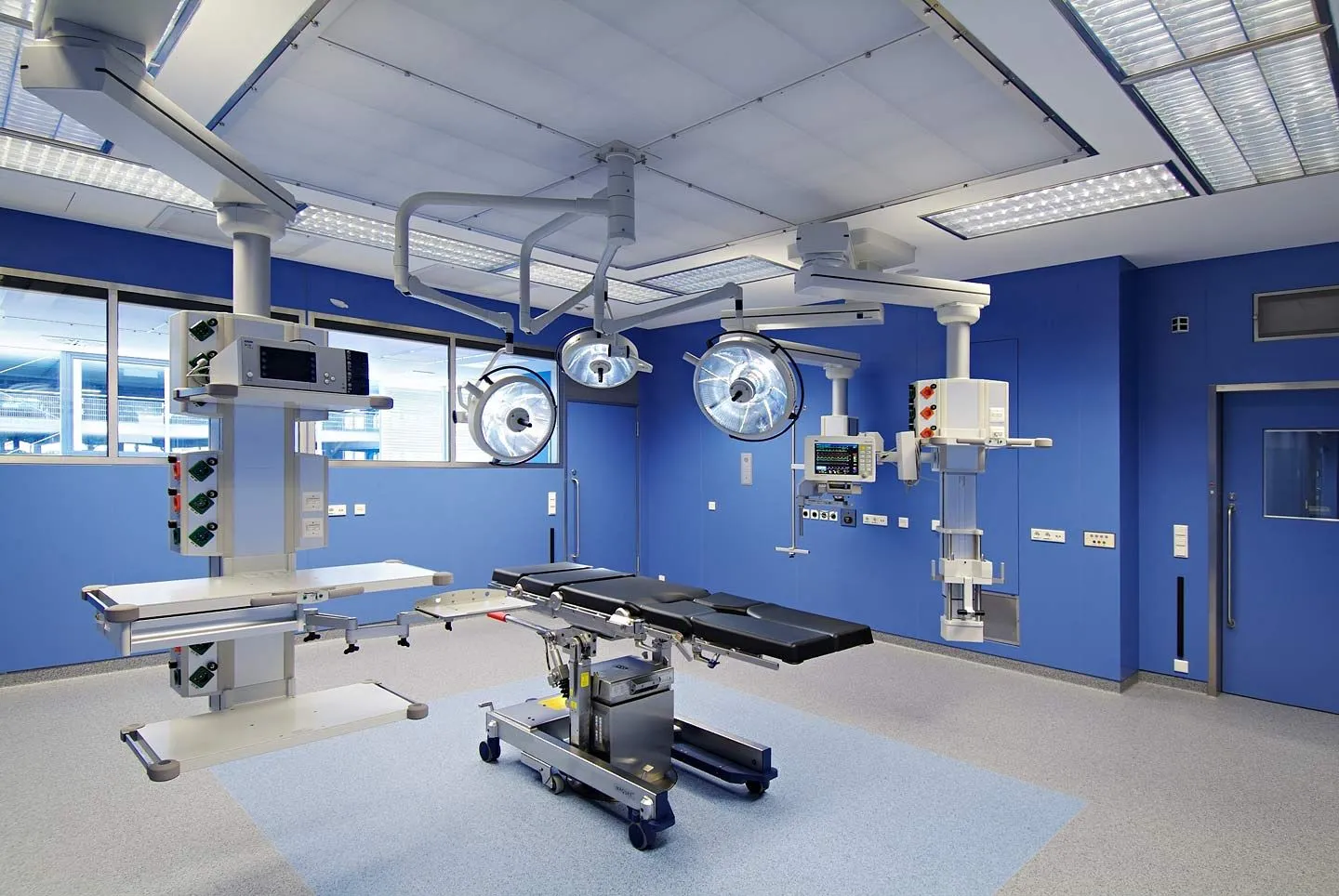
Cleanroom validation is the documented process of demonstrating that a controlled environment performs within its specified parameters — air cleanliness, airflow velocity, pressurisation, temperature, humidity, and other environmental conditions — under defined operational states. For pharmaceutical manufacturers, biotechnology facilities, hospital operation theatres, medical device manufacturers, electronics and semiconductor plants, food processing facilities, and research laboratories, cleanroom validation is not a one-time commissioning activity. It is a recurring regulatory obligation that confirms the environment remains fit for purpose between initial qualification and every subsequent requalification cycle.
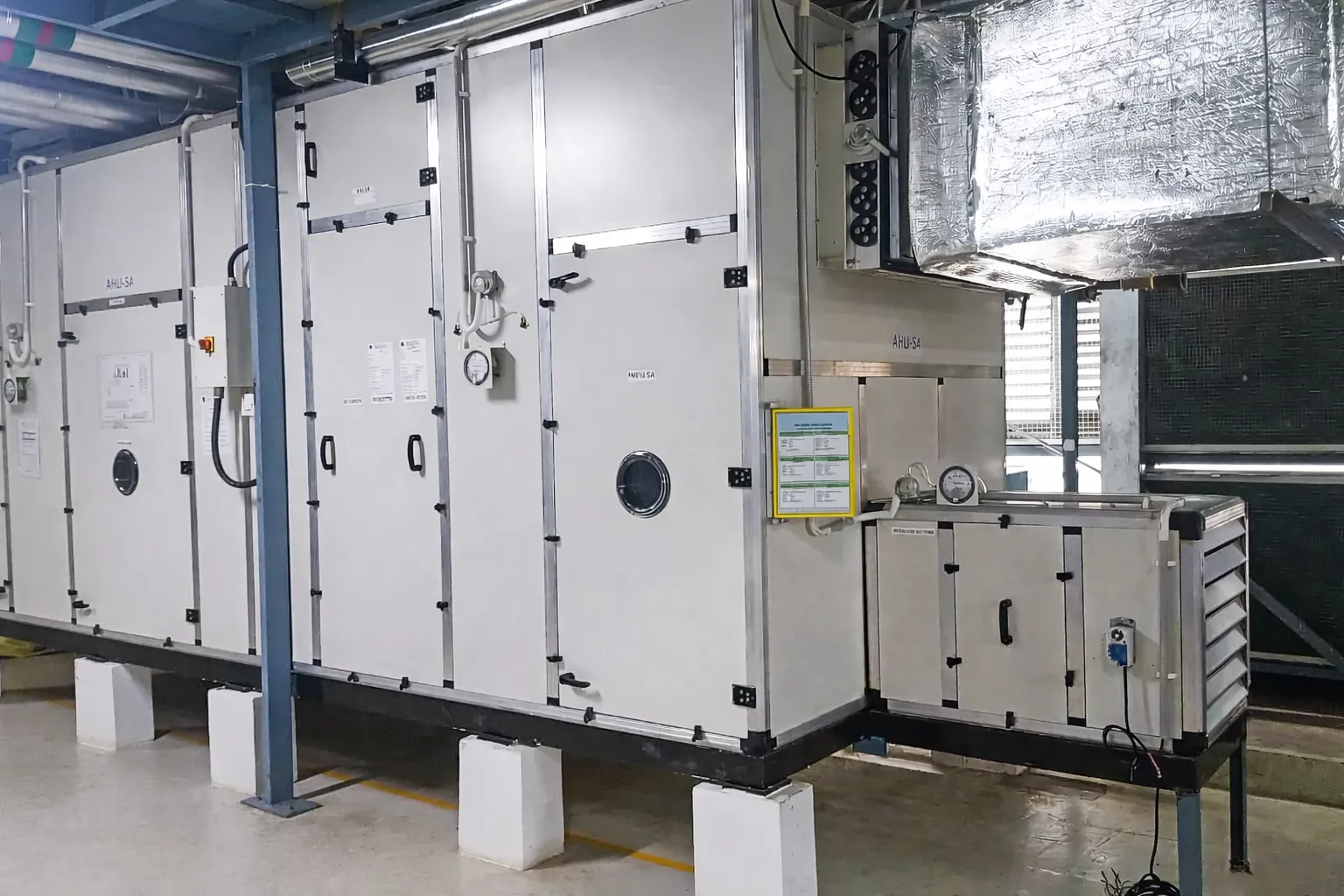
S.M. Enterprises provides cleanroom validation services in Bangalore for facilities operating under ISO 14644, WHO GMP, Schedule M, and NABH frameworks — covering initial commissioning validation, periodic requalification, HVAC validation, and ongoing cleanroom validation AMC services across Karnataka and South India.
What Cleanroom Validation Covers
A complete cleanroom validation programme addresses every performance parameter that determines whether a controlled environment meets its ISO classification and regulatory requirements. S.M. Enterprises conducts the following tests using calibrated instruments traceable to national standards:
-
Test 01
Air Velocity Test
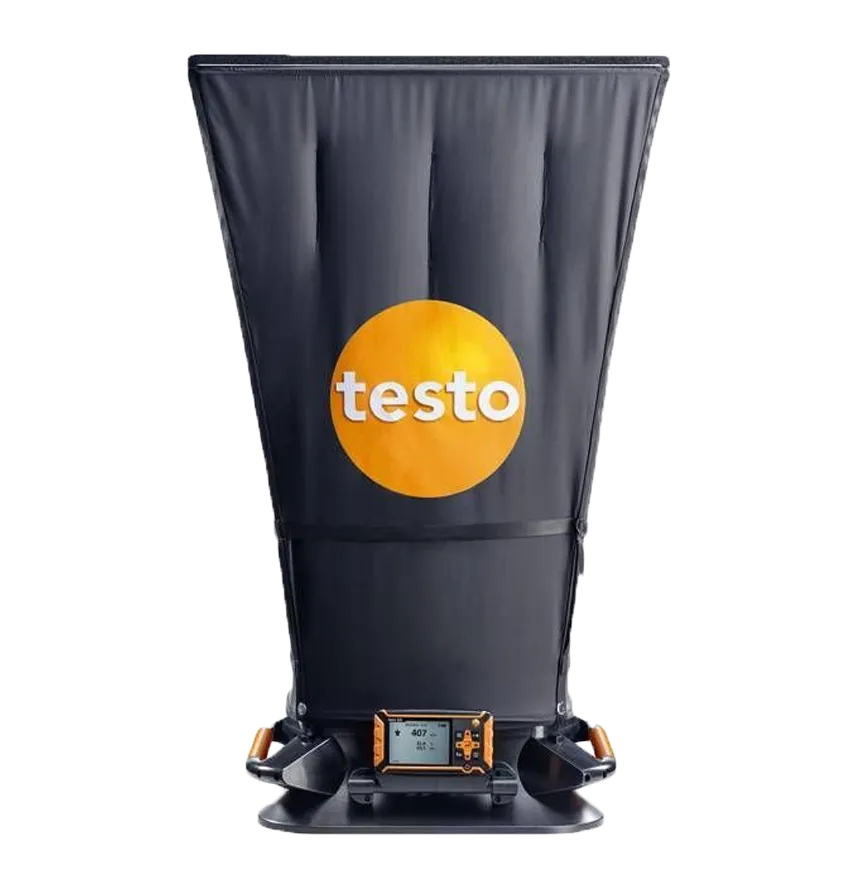
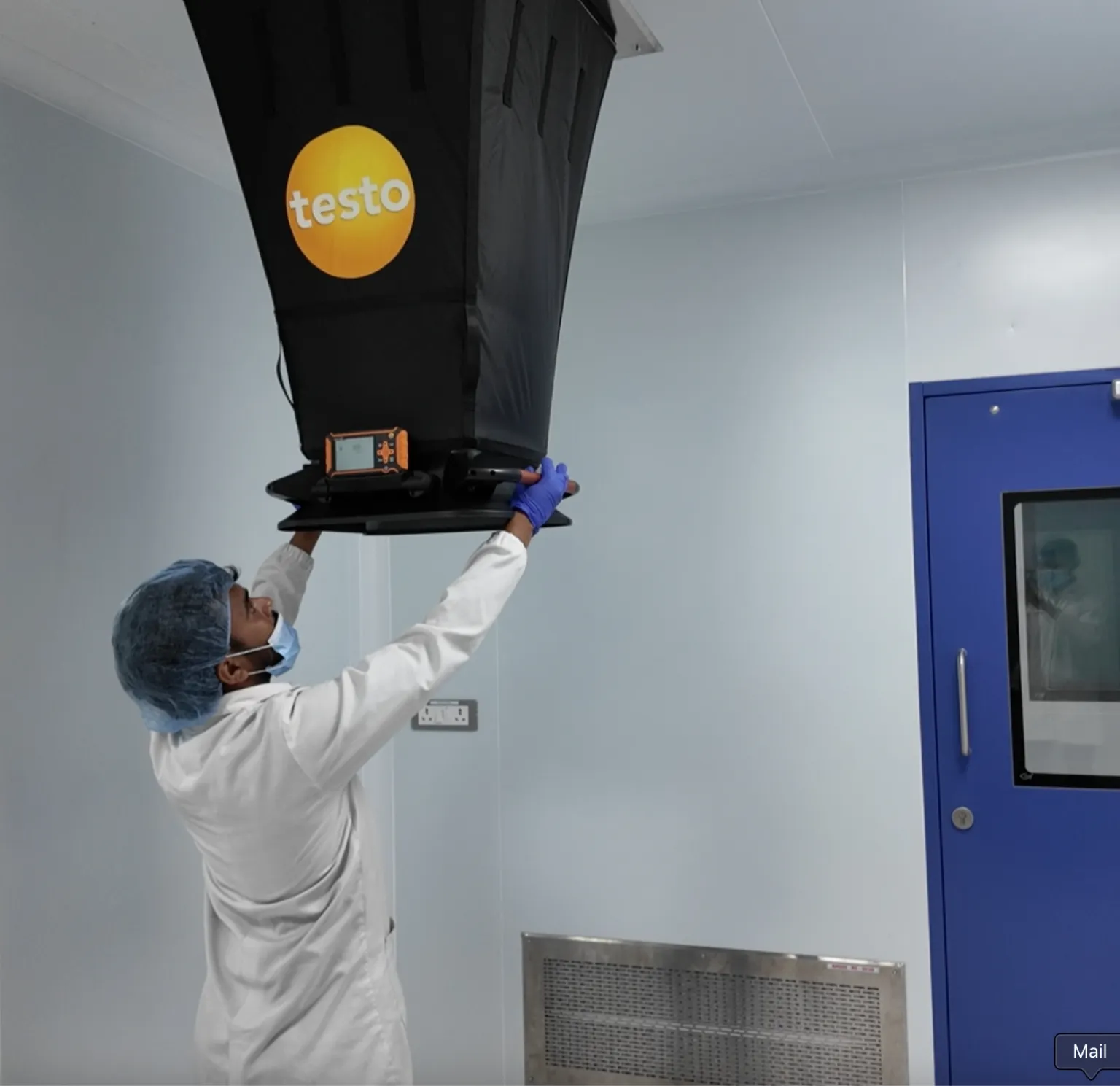
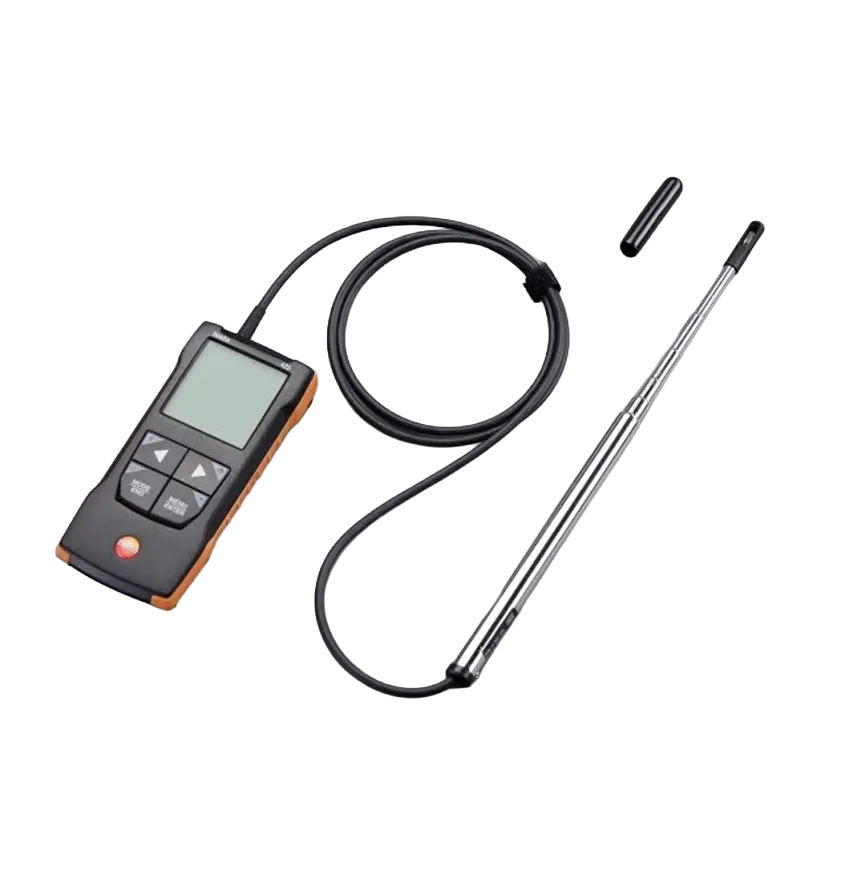
The air velocity test measures airflow velocity at the face of each HEPA filter using a calibrated anemometer, verifying that supply air velocity is uniform across the filter array and meets the design specification for the cleanroom class. Insufficient or non-uniform velocity indicates filter degradation, fan performance decline, or duct system issues that must be resolved before the room can be considered compliant.
-
Test 02
Differential Pressure Test
The differential pressure test measures the pressure gradient between adjacent cleanroom zones using a calibrated differential pressure meter. Maintaining correct positive or negative pressure differentials between zones is essential for preventing cross-contamination — a primary containment failure mode in pharmaceutical and hospital environments.
-
Test 03
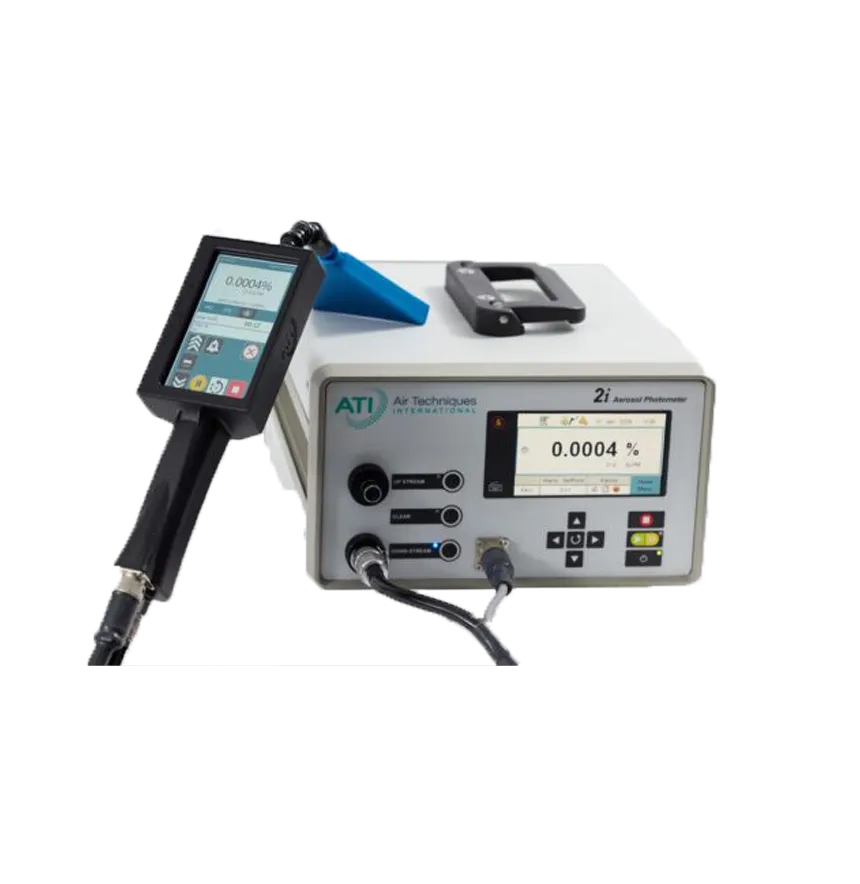
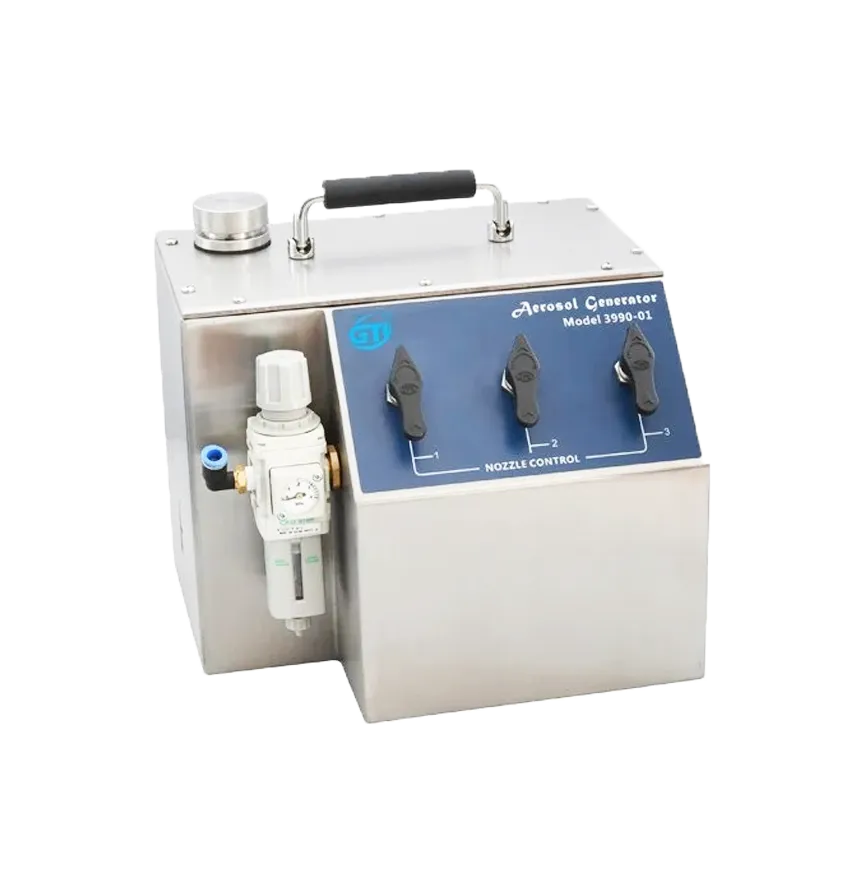
Filter Integrity Test (PAO / DOP)
The filter integrity test — conducted using the PAO or DOP aerosol challenge method — verifies that each HEPA or ULPA filter is free from pinholes, seal failures, and bypass leakage. A filter that passes airflow specification but fails integrity testing is a contamination risk regardless of its measured velocity performance, making this one of the most critical individual tests in the validation protocol.
-
Test 04
Particle Count Test
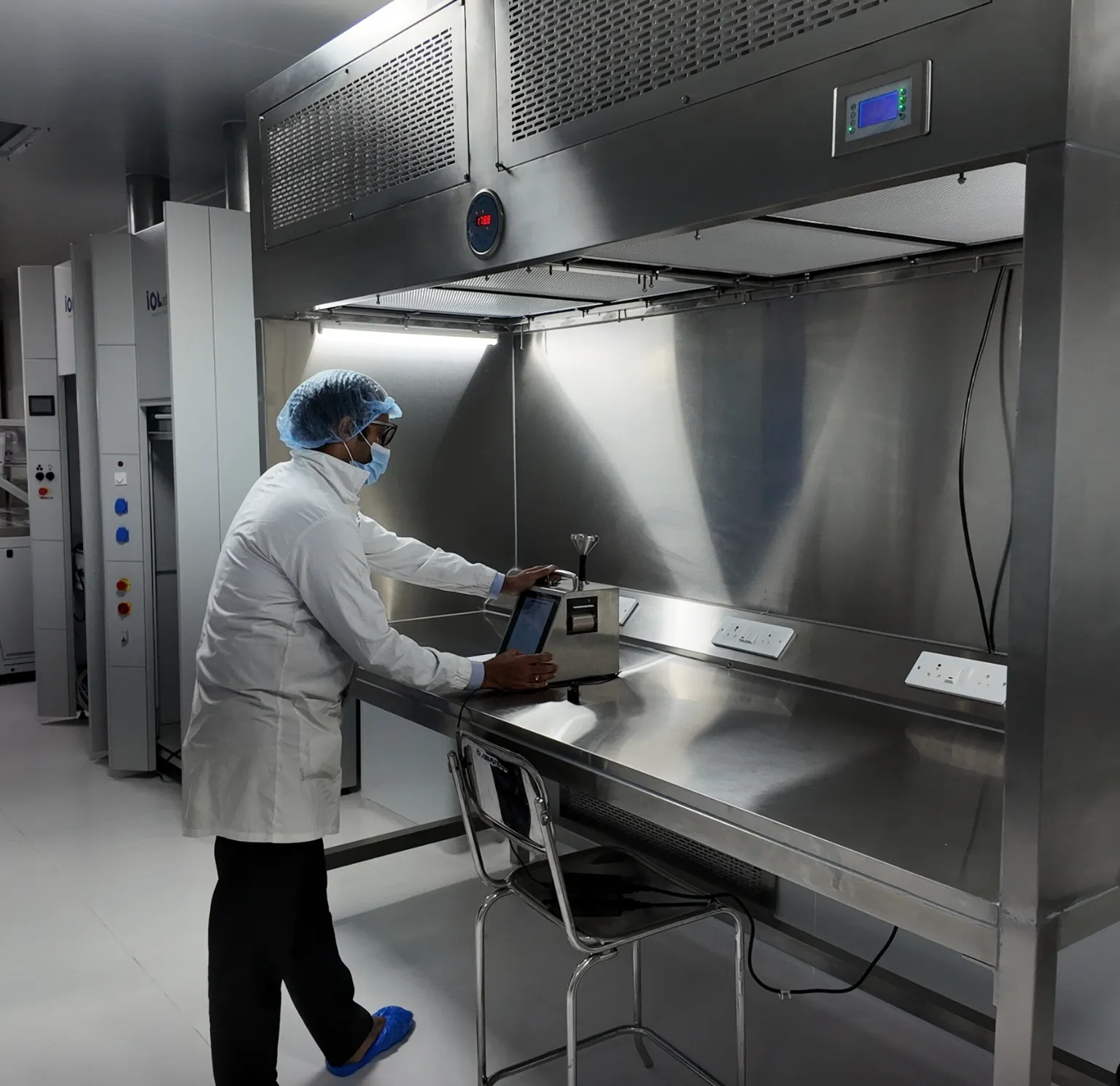
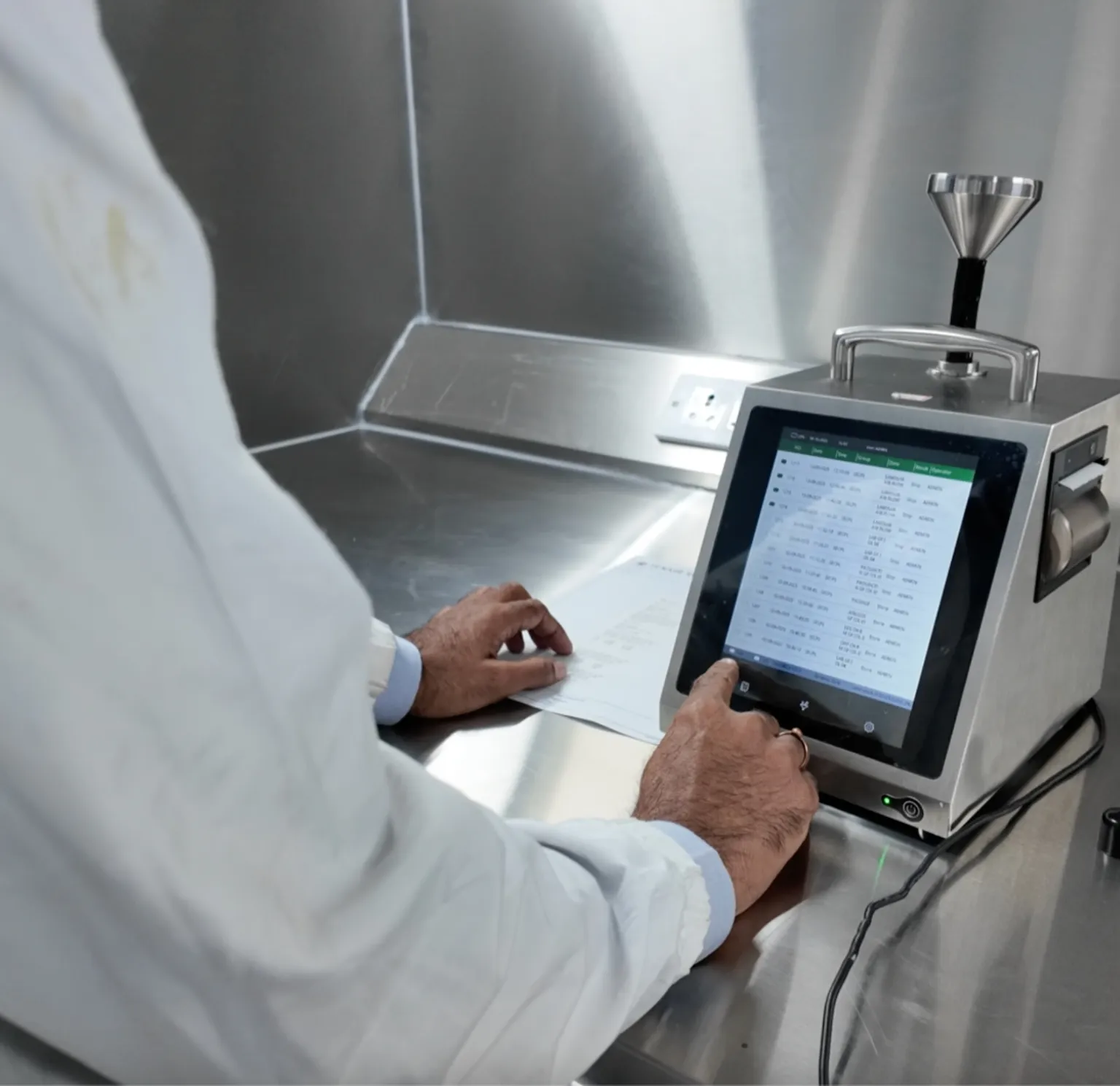
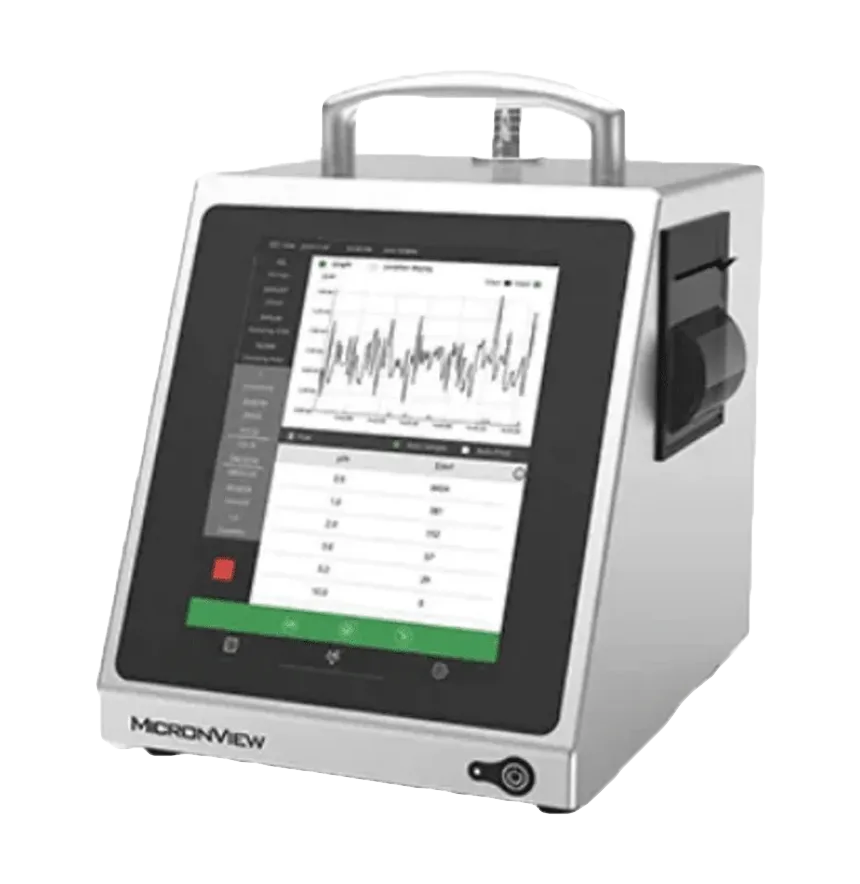
The particle count test measures airborne particulate concentration at defined sample locations within the cleanroom using a calibrated particle counter, classifying the environment against ISO 14644-1 cleanliness classes. This test is the primary basis for ISO classification and is required at commissioning, after maintenance events, and at defined periodic intervals under GMP and ISO requalification schedules.
-
Test 05
Particle Recovery Test
The particle recovery test evaluates how quickly the cleanroom restores its classified air cleanliness after a deliberate contamination challenge — assessing the effectiveness of the HVAC system's air change rate and filtration performance under operational conditions.
-
Test 06
Air Flow Pattern Test (Smoke Study)
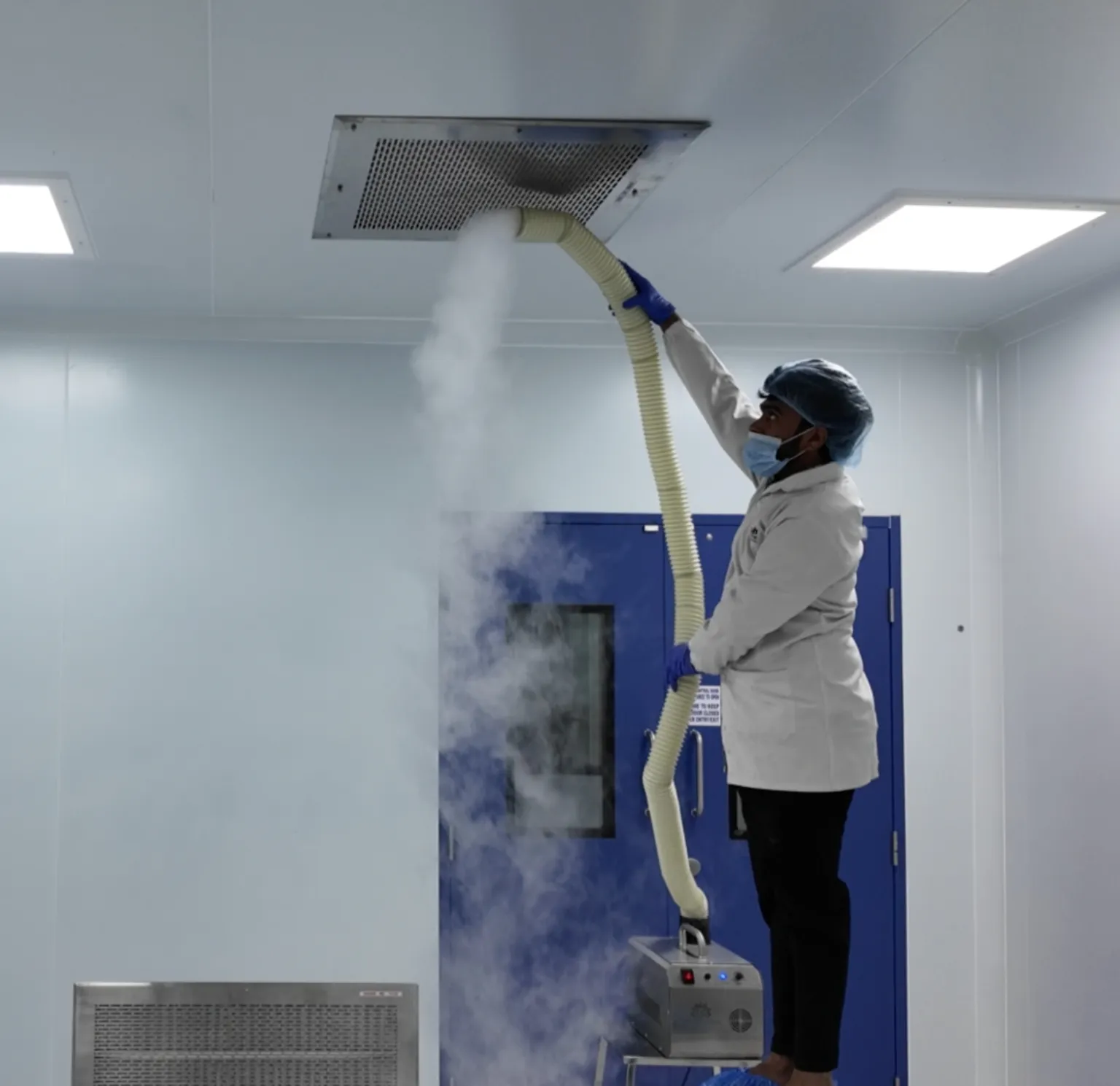
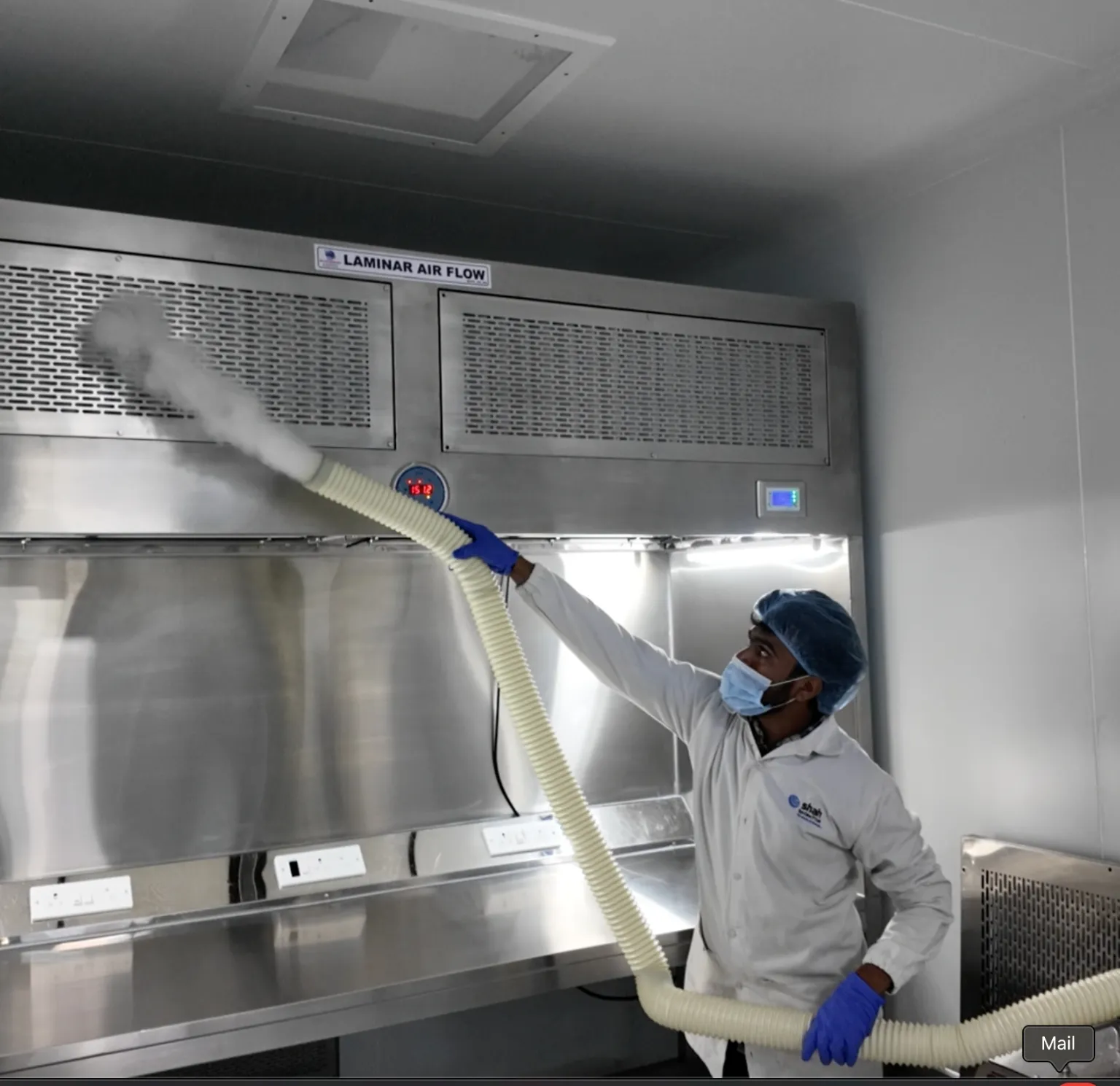
The air flow pattern test — commonly called a smoke study — uses a non-toxic smoke generator to visualise airflow direction, velocity uniformity, and turbulence within the cleanroom. Smoke studies identify dead zones, recirculation pockets, and airflow disturbances that particle counters cannot detect, and are a required element of pharmaceutical cleanroom validation and modular OT qualification under NABH guidelines.
-
Test 07
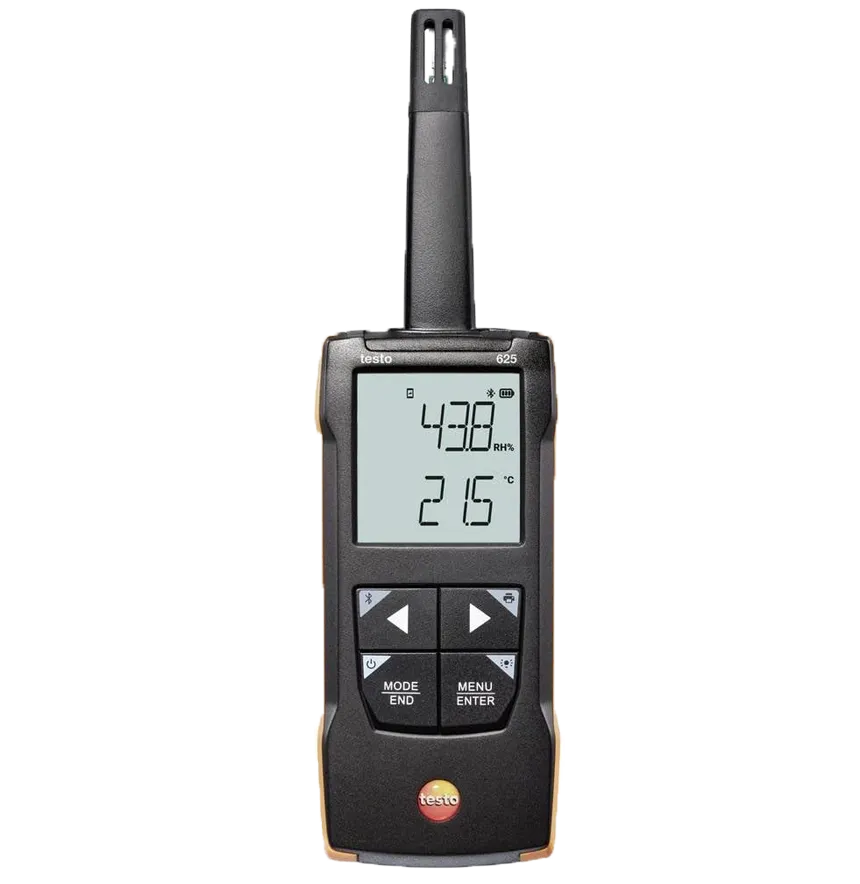
Temperature and Humidity Test
The temperature and humidity test verifies that the HVAC system maintains environmental thermal conditions — temperature and relative humidity — within the specified setpoint tolerances using a calibrated thermo hygrometer. Deviations from specified ranges in pharmaceutical storage areas, biotechnology laboratories, or hospital environments can directly affect product quality and patient safety.
-
Test 08
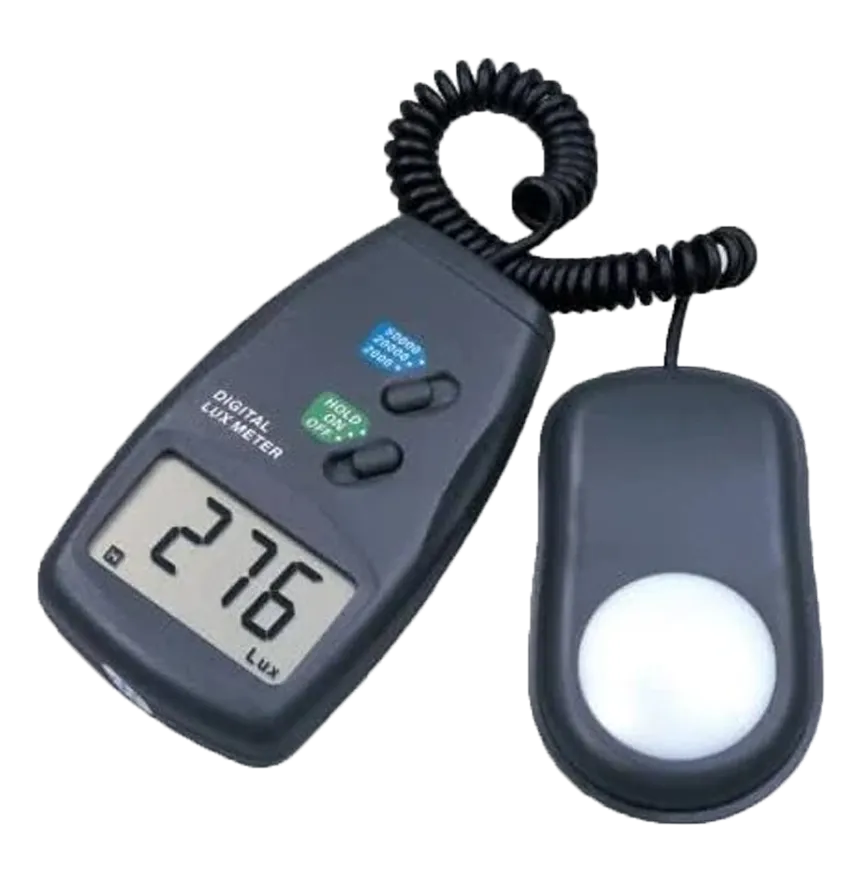
Luminous Test
The luminous test measures illumination intensity across the cleanroom working plane in lux using a calibrated lux meter, confirming compliance with the lighting standards applicable to the cleanroom classification and task requirements.
-
Test 09
Sound Level Test
The sound level test measures ambient noise in the cleanroom environment using a calibrated sound level meter, verifying acoustic compliance for operator comfort and equipment sensitivity requirements.
Cleanroom Validation AMC and Periodic Requalification
ISO 14644 and GMP frameworks require that cleanrooms are requalified at defined intervals — typically every six to twelve months depending on classification and regulatory context. S.M. Enterprises offers cleanroom validation AMC services that schedule, execute, and document periodic requalification testing, keeping facilities continuously audit-ready without requiring clients to manage individual test appointments or instrument calibration logistics.
Pharmaceutical companies, biotechnology firms, hospitals, medical device manufacturers, research laboratories, QA/QC managers, validation engineers, EPC contractors, and facility managers in Bangalore planning initial cleanroom certification, periodic requalification, or ongoing AMC coverage are invited to contact S.M. Enterprises for a detailed scope review and quotation. Call +91 82964 97411 or submit your requirements through the enquiry form on this page.