Choosing the right metal door is critical in GMP facilities. This guide explains how door gaps, gaskets, interlocks and cleanability affect pressure control, contamination risk and audit readiness, helping you specify doors that stay compliant, durable and easy to clean.
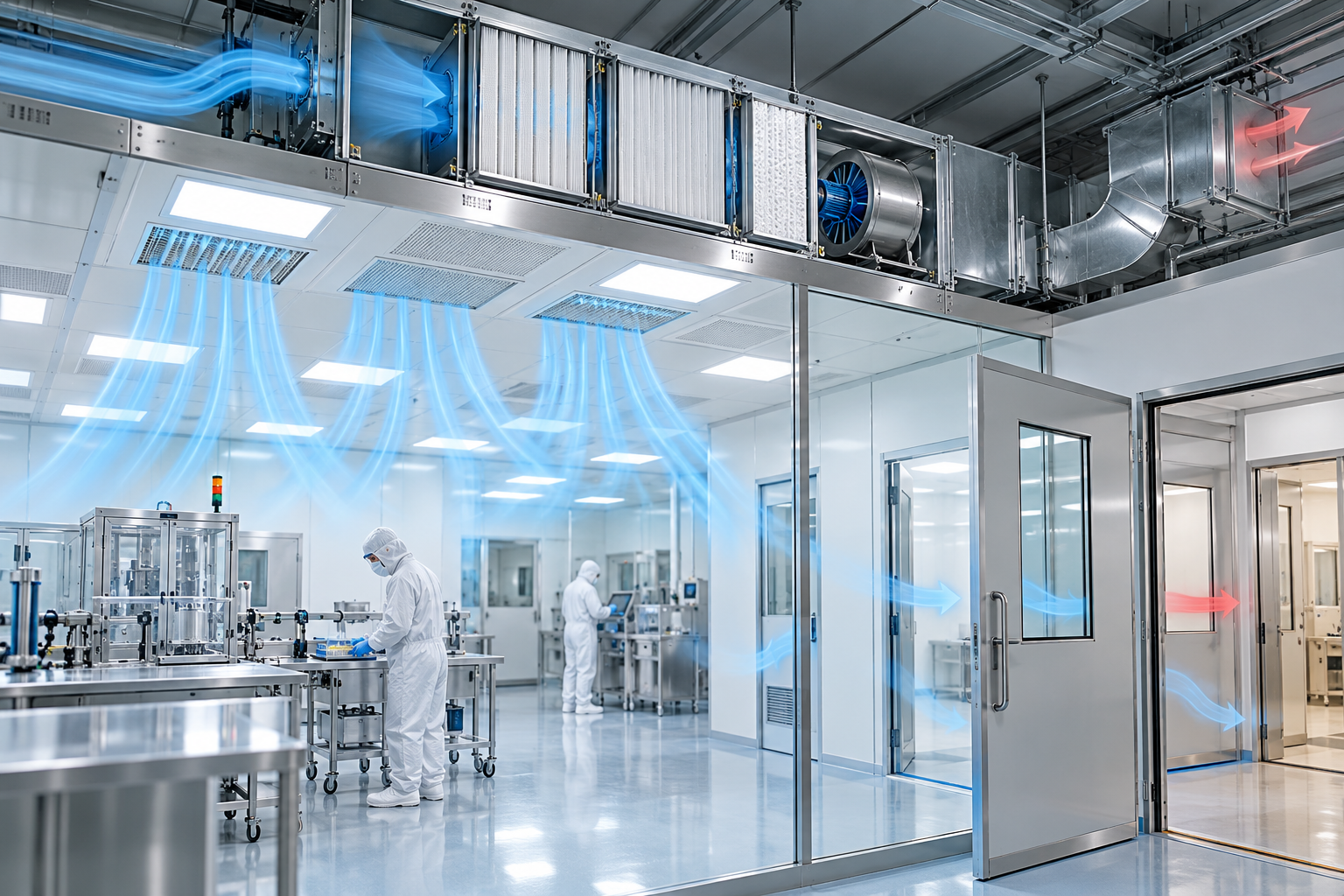
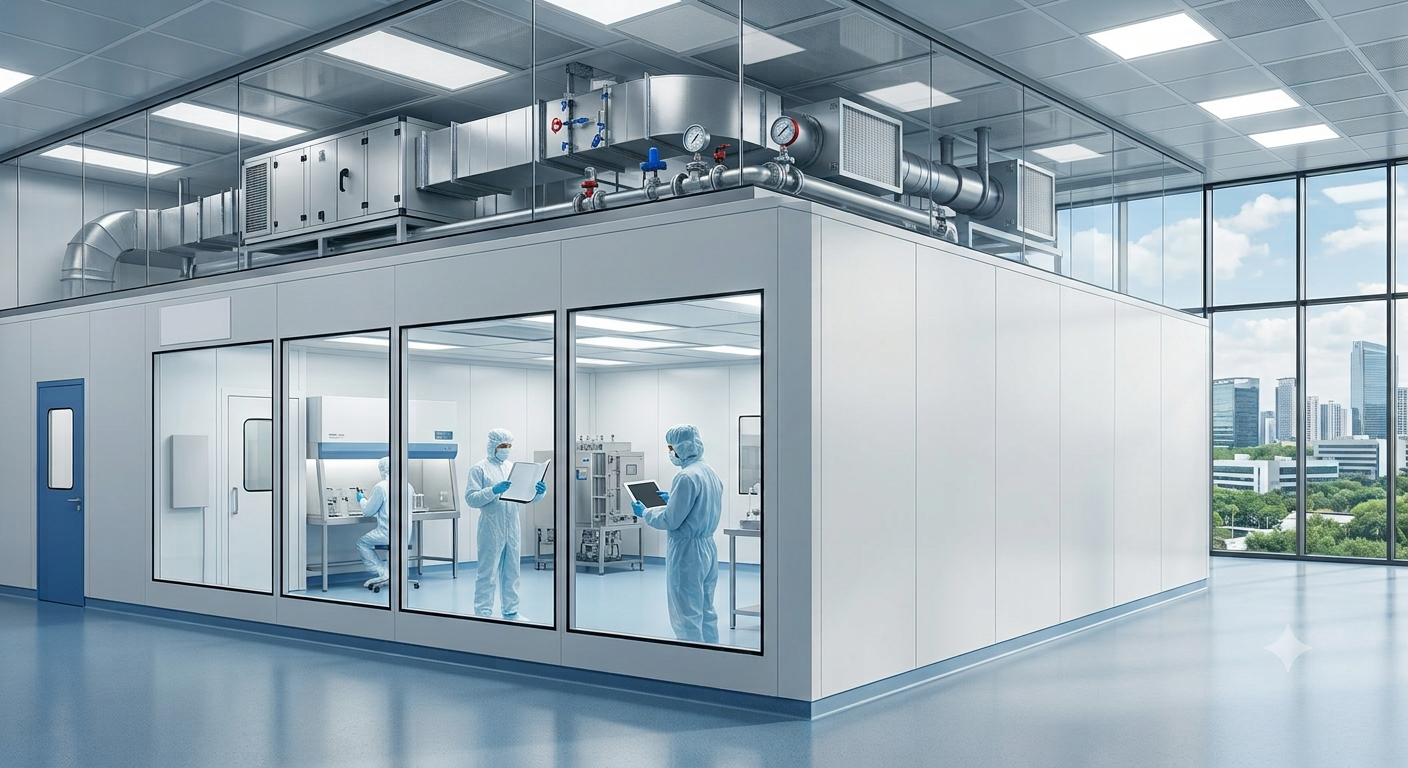
Doors decide whether a cleanroom stays clean. They separate classified areas, hold pressure cascades, control how people and materials move, and must withstand years of cleaning and disinfection. For pharmaceutical, biotech and medical device plants, the door is a working part of the contamination control strategy.
A poorly chosen door can cause pressure loss, particle ingress, microbial harbourage points and, eventually, audit observations. This guide covers the four things that matter most when selecting metal doors for GMP facilities: gaps, gaskets, interlocks and cleanability.
Why Metal Doors Are Preferred in GMP Areas
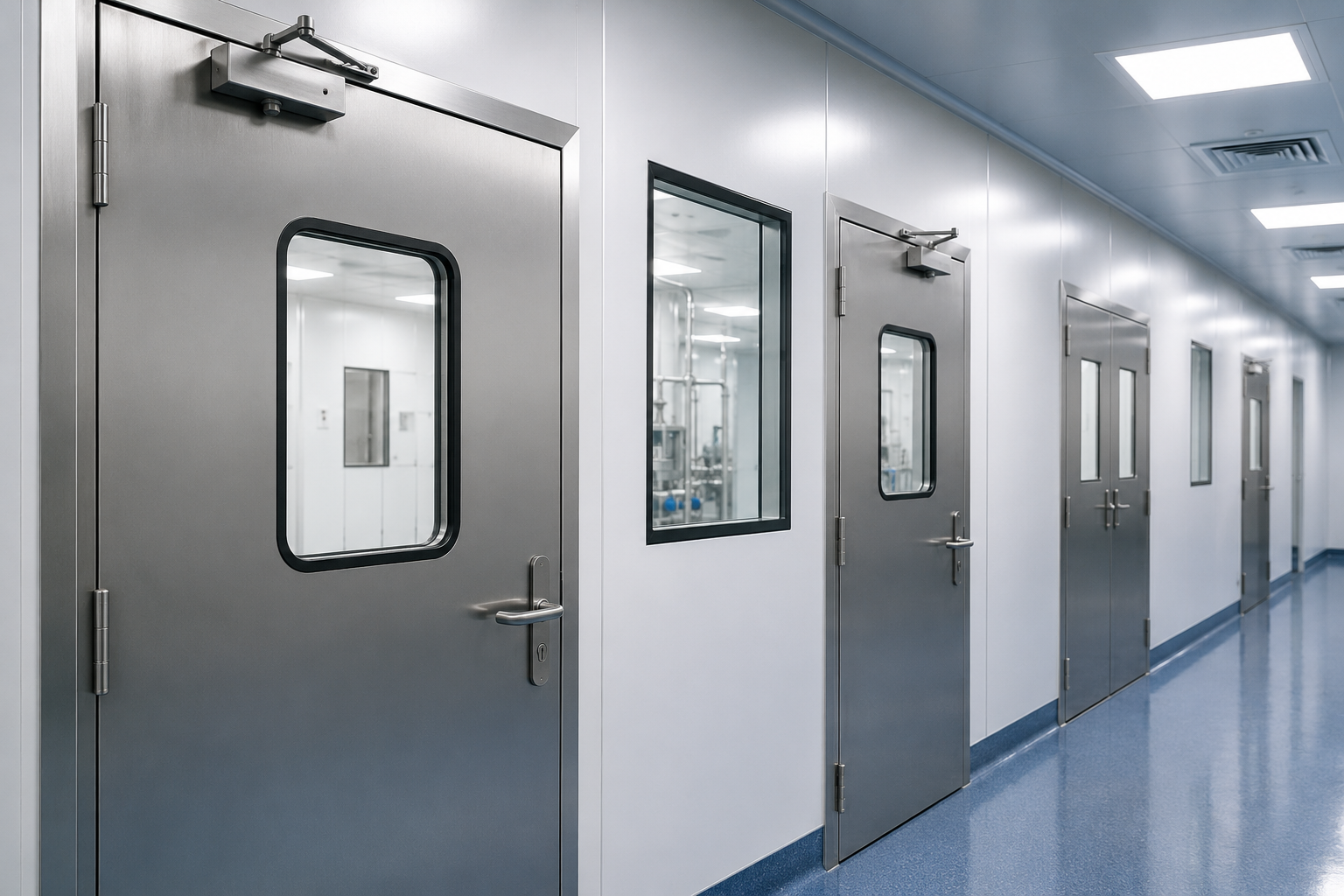
Wooden and unsealed doors absorb moisture, shed particles and cannot withstand repeated disinfectant exposure. Metal doors, made from stainless steel (SS 304 or SS 316), galvanised iron with a pharma-grade coating, or aluminium, offer:
- Non-porous, non-shedding surfaces
- Resistance to cleaning agents and sanitisers
- Dimensional stability, so the door does not warp or swell
- Long service life with low maintenance
- Compatibility with flush, sealed and pressure-rated designs
Regulatory frameworks such as Schedule M (India), WHO GMP guidelines, EU GMP Annex 1 and ISO 14644 all expect surfaces in cleanrooms to be smooth, impervious, unbroken and easy to clean. Doors are no exception.
1. Door Gaps: Small Openings, Big Problems
Every gap around a door is a leakage path. Excessive gaps allow air to move between rooms of different classifications, which can collapse your pressure differential and let particles or microorganisms travel into cleaner zones.
What to check:
- Door-to-frame gap: Keep it uniform and as tight as practical, typically in the range of 2 to 4 mm. Uneven gaps usually point to poor manufacturing tolerance or frame distortion.
- Bottom gap: The largest leak point. Use a drop-down (automatic) seal or a sweep with a flush threshold rather than leaving an open undercut.
- Frame-to-wall junction: Wall and frame must be sealed with a suitable sealant, with no visible joints or cracks. Flush, coved or radius junctions are easier to clean.
- Pressure differential support: Cleanroom pressure cascades are commonly maintained at around 10 to 15 Pa between adjacent classified areas. The door must hold this reliably at design airflow.
Selection tip: Ask the manufacturer for tolerance data and, where relevant, air leakage test results. Confirm the door will still seal properly after installation and wall finishing, not only on the factory floor.
2. Gaskets: The Seal You Cannot Ignore
Gaskets close the gaps that tolerances cannot. In GMP areas they must also be cleanable and chemically stable.
What to look for:
- Material: Silicone and EPDM are widely used. Choose a grade compatible with your disinfectants, such as quaternary ammonium compounds, alcohol, hydrogen peroxide and peracetic acid, and with fumigation or VHP cycles if you use them.
- Continuous, jointless profile: Gaskets should run unbroken around the door, with neatly mitred or moulded corners instead of open joints that collect residue.
- Recessed or flush fitting: A gasket seated in a groove is less likely to trap dirt and easier to wipe.
- Non-shedding and non-colour-leaching: Poor quality rubber can crack, harden or shed particles over time.
- Replaceability: Gaskets wear out. Choose a design that allows replacement without damaging the door leaf, and include gasket inspection in your preventive maintenance schedule.
Common mistake: Choosing the cheapest gasket and then finding it degrades within months due to repeated disinfectant contact.
3. Interlocks: Controlling Movement and Protecting Pressure Zones
In airlocks, pass-through chambers and personnel or material entry points, doors should not be open on both sides at the same time. If they are, the pressure barrier is lost and cross-contamination becomes likely. EU GMP Annex 1 specifically expects airlocks and interlock systems to prevent simultaneous opening of doors where contamination control demands it.
Types of interlock systems:
- Electromagnetic (EM) lock based interlocks: The most common option. A control panel allows only one door to open at a time.
- Mechanical interlocks: Simple and reliable where power-free operation is preferred, though less flexible.
- Electronic controller with indicators: Door-status lights, buzzers and timers, often with integration to a BMS or access control system.
Design points to confirm:
- Emergency release: Interlocks must never trap personnel. A break-glass or emergency override is essential, and it must align with fire safety requirements and local regulations.
- Fail-safe behaviour: Define what happens during power failure. The door should default to a safe, accessible state.
- Alarm and override logic: Alarms for doors held open too long, and controlled, logged overrides for maintenance.
- Door closers: An interlock is only as good as the door's ability to close and latch fully every time.
- Qualification support: Request documentation for IQ/OQ, including interlock logic test cases.
4. Cleanability: Design Out the Dirt Traps
If a surface cannot be cleaned and verified clean, it should not be in a GMP area. Door design should remove places where dust, residues and microorganisms can accumulate.
Cleanability checklist:
- Flush, smooth surfaces: No exposed screws, rivets or projecting fixings. Prefer concealed or welded construction.
- Radiused edges and coved corners: Sharp corners are hard to clean.
- Hinges: Concealed, or smooth, sealed hinges designed for cleanroom use. Avoid open knuckle hinges with crevices.
- Vision panels: Flush-mounted, double-glazed and sealed on both faces so no ledge or gap collects particles.
- Door furniture: Smooth handles and push plates made from stainless steel. Avoid decorative or textured hardware.
- Surface finish: Fine-brushed or polished stainless steel, or a high-quality powder coating that resists chipping. Chipped coating exposes bare metal and creates contamination risk.
- Core filling: Where doors have an internal infill, such as PUF or honeycomb, it must be fully enclosed and sealed.
- No horizontal ledges: Surfaces that slope or are flush prevent dust build-up and make wipe-down faster.
Choosing the Right Material: SS vs Coated Steel
| Factor | Stainless Steel (SS 304/316) | Powder-Coated GI / CRCA |
|---|---|---|
| Corrosion resistance | Excellent, with SS 316 best for harsh chemicals | Good, provided the coating stays intact |
| Cleanability | Very high | High, with coating quality critical |
| Cost | Higher upfront | Lower upfront |
| Best suited for | Sterile areas, wet zones, aggressive disinfectants | General cleanrooms, corridors, packing areas |
A practical approach is to specify SS 316 or SS 304 for sterile, wet or high-wash areas, and quality coated steel for less demanding zones, balancing compliance and budget.
Matching the Door to the Room Classification
Not every door in your facility needs the same specification. Match the design to the risk:
- Grade A/B and ISO 5 to 7 areas: Full flush design, SS construction, high-integrity gaskets, interlocks and tight pressure control.
- Grade C/D areas: Sealed, cleanable doors with gaskets and drop seals, and interlocks wherever airlocks demand it.
- Support, utility and warehouse areas: Durable, easy-to-clean doors, with fire ratings where required.
Common Mistakes to Avoid
- Selecting doors on price alone and ignoring total lifecycle cost
- Ignoring pressure differential requirements during door design
- Using gaskets not tested against your actual disinfectants
- Skipping emergency egress planning for interlocked doors
- Installing exposed hardware that creates cleaning difficulties
- Not involving QA, validation and engineering teams early in specification
- Overlooking fire rating, acoustic and radiation requirements where applicable
Quick Selection Checklist
- Is the door material suited to the area classification and disinfectants used?
- Are door-to-frame and bottom gaps controlled and verifiable?
- Are gaskets continuous, replaceable and chemically compatible?
- Does the interlock system include emergency release and fail-safe logic?
- Are all surfaces flush, smooth and free of crevices?
- Does the supplier provide material certificates, drawings and qualification documents?
- Is there a plan for preventive maintenance and spare gaskets?
Frequently Asked Questions
What type of metal door is best for a pharmaceutical cleanroom?
Stainless steel (SS 304 or SS 316) flush doors are generally preferred for classified areas because they are non-porous, corrosion resistant and easy to clean. High-quality powder-coated steel doors can suit less critical zones.
What is the ideal gap between a cleanroom door and its frame?
There is no single universal figure, but a tight, uniform gap, commonly around 2 to 4 mm, combined with gaskets and a drop seal, helps maintain pressure differentials. Always follow your design specification and validation requirements.
Why are interlocked doors required in GMP airlocks?
Interlocks prevent both doors of an airlock from opening together, which protects pressure cascades and reduces the risk of cross-contamination between rooms of different cleanliness levels.
Which gasket material is best for GMP doors?
Silicone and EPDM are the most common choices. The right one depends on the disinfectants, cleaning frequency and any fumigation method used in your facility.
How often should door gaskets be inspected?
Include gaskets in routine preventive maintenance, with visual checks at regular intervals and replacement as soon as hardening, cracking or loss of sealing is seen. Your SOP and risk assessment should define the frequency.
Can metal doors be fire rated as well as GMP compliant?
Yes. Fire-rated metal doors can be designed with cleanroom-friendly finishes and gaskets, but they must be certified to the relevant fire standard and approved for the intended use.
Final Thoughts
The right metal door protects product quality, supports pressure control, simplifies cleaning and helps you stay inspection-ready. By focusing on tight and controlled gaps, durable gaskets, reliable interlocks and truly cleanable design, you reduce contamination risk and long-term maintenance costs.
Planning a cleanroom project? Talk to the S.M.Enterprises [https://smentindia.com/] team about your GMP metal door requirements, and share a detailed specification to get a quotation on +91 8296497411 or marketing@smentindia.com.
Need this for your facility?
Get a detailed quote from our engineering team — typically within 24 hours.